
Burton upon Trent’s story reaches back more than a thousand years, and at the heart of that story is Saint Modwen, an Irish noblewoman, abbess and missionary whose name has become inseparable from the town.
Today, visitors can still discover her legacy in the centre of Burton, at St Modwen’s Church, along the River Trent and on Andressey Island, where her story is remembered through heritage, place names and public art.
For anyone exploring Burton upon Trent, the story of St Modwen offers a fascinating glimpse into the town’s early Christian heritage and the centuries of history that followed.
A 7th-Century Beginning
Christianity reached Mercia, one of the Anglo-Saxon kingdoms, in 653 AD, when a monastery was established at Repton, then the kingdom’s capital. According to tradition, it was soon afterwards that Saint Modwen came to the Burton area. An Irish noblewoman who became an abbess, Modwen travelled with two fellow nuns, Lazar and Althia.
Together, they established a religious settlement on an island in the River Trent. The island became known as Saint Andrew’s Isle, or Andressey, and the church they founded was dedicated to God and Saint Andrew.
The three women are said to have remained there for seven years before Modwen continued her pilgrimage to Rome. The story of Modwen did not end there.
On her return, she is traditionally said to have founded another church on the opposite side of the river, at the foot of what became known as Scalpcliffe Hill. This church was dedicated to Saint Peter, on the site associated with present-day Stapenhill.
Her missionary journey later took her northwards to Scotland, where tradition records that she died at Lanfortin, near Dundee.
The Legend of St Modwen and the Swans
The silver swans are one of the most memorable parts of the St Modwen story. According to local tradition, after her death her companions witnessed her soul being carried heavenwards by silver swans. Her body was then returned to Burton for burial.
Tradition also says that Modwen lived to the remarkable age of 130.
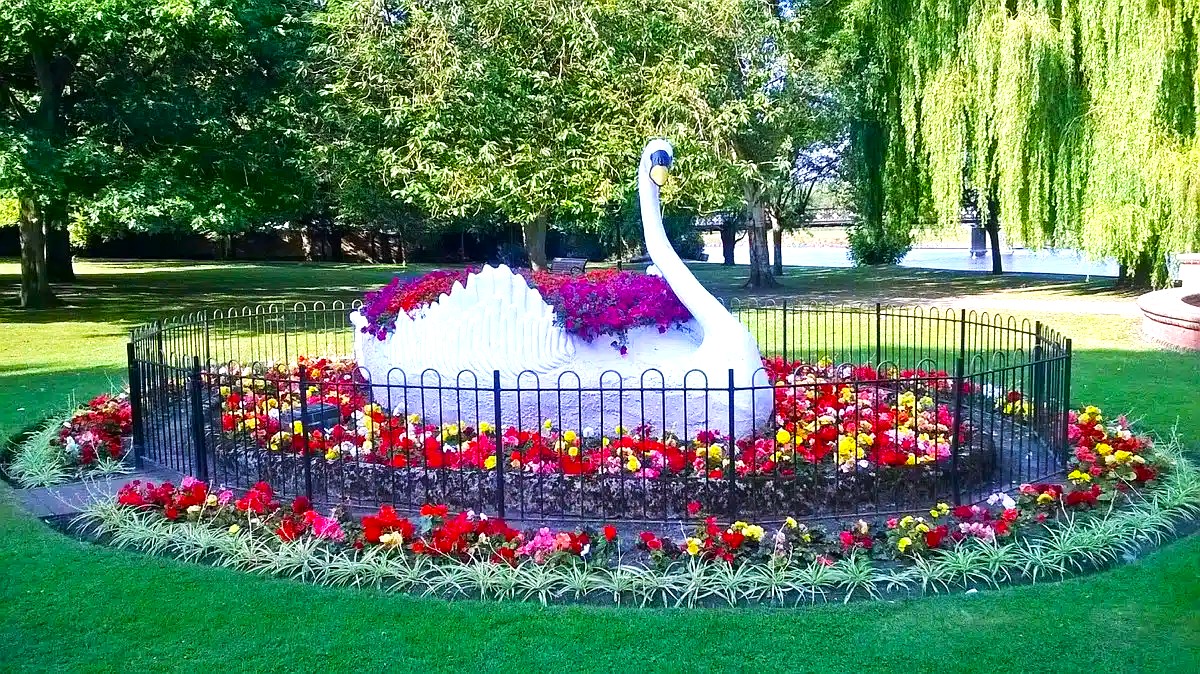
The swan connection can still be seen in Stapenhill Gardens, where the large white swan sculpture provides a modern reminder of this ancient story.
While these elements belong to the traditional story of Saint Modwen rather than verifiable modern biography, they have become an important part of Burton’s cultural heritage.
Andressey Island and The First Shrine
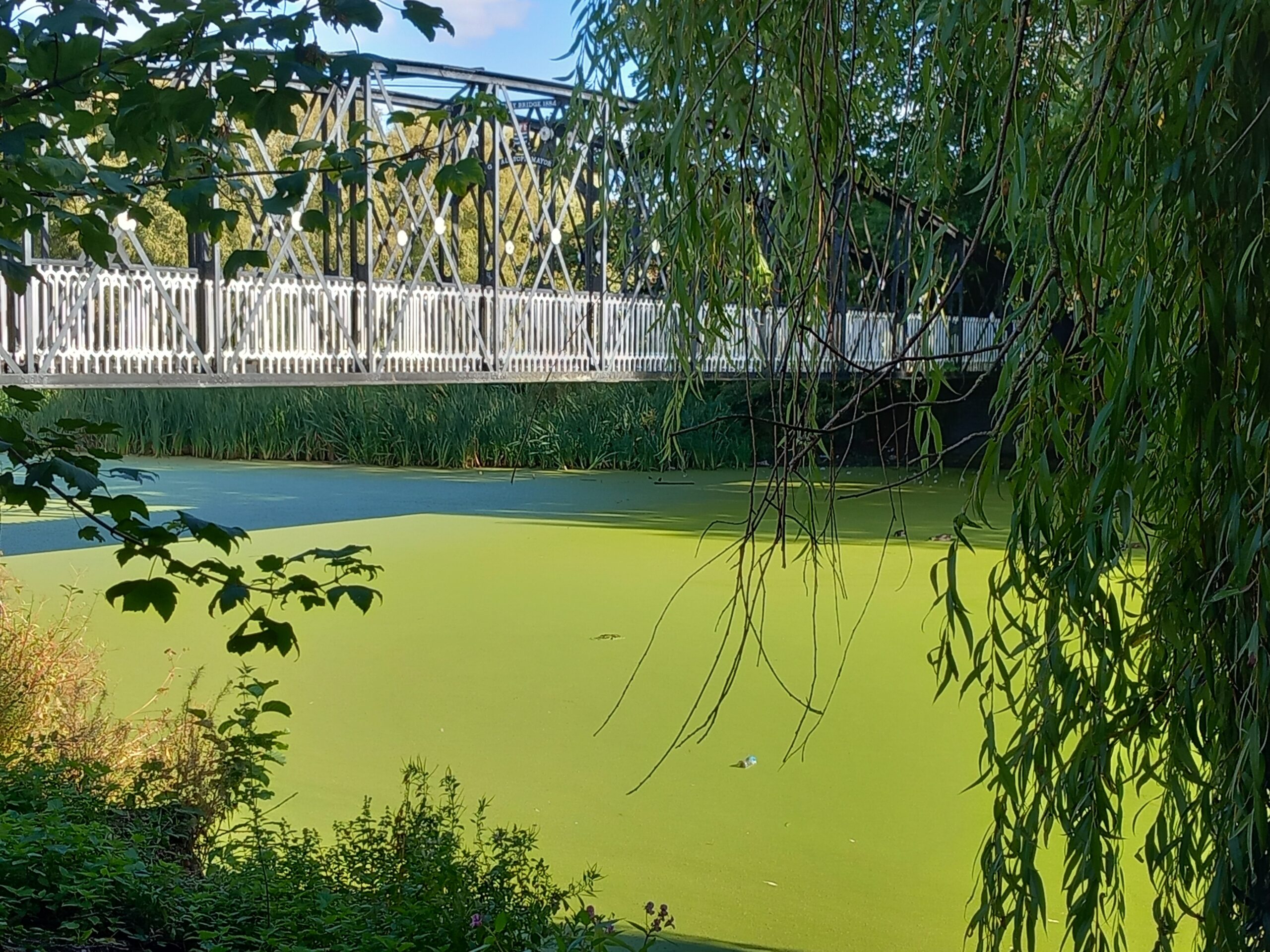
A shrine to Saint Modwen was traditionally established on Andressey Island. That early shrine was destroyed during the Danish invasions of 874 AD, but Modwen’s association with Burton survived.
The landscape around Burton also preserves reminders of this period. The neighbouring islands of Broadholme and Horsholme retain names connected with the Danish word holme, meaning a water meadow or island.
The site of St Modwen’s early religious settlement continued to have significance for centuries. A modern monument commemorating Saint Modwen was erected on Andressey Island towards the end of the 20th century, bringing her story back into the landscape where the tradition says it began.
Burton Abbey and The Return of St Modwen’s Story
A major chapter in Burton’s history began in 1002 AD, when the Saxon nobleman Wulfric Spot founded Burton Abbey. The abbey became one of the most important religious establishments in Staffordshire, and Saint Modwen became closely associated with it. Her reputed remains were brought to the abbey and a shrine was established there.
Historic records indicate that an altar dedicated to Modwen existed in the abbey church by the late 11th century. Further interest in her cult developed over subsequent centuries.
In 1201, some of her alleged remains were rediscovered, leading to renewed interest in her story and reports of miracles associated with her.
A new shrine was built in the abbey church in the early 15th century. By the 1530s, the shrine reportedly featured an image of the saint with a red cow and a staff, which was traditionally believed to have particular significance for women experiencing difficulties in childbirth.
The devotion to St Modwen was not confined to Burton. By the late medieval period, her name and cult were known at a number of religious establishments with connections to Burton, while relics were also associated with Canterbury and Salisbury.
Burton nevertheless remained at the centre of her story.
St Modwen’s Well
Another fascinating part of the heritage story is St Modwen’s Holy Well on Andressey Island. By Tudor times, the well was associated with a chapel on the island and was reputed to have powers of healing, including cures for the condition historically known as the King’s Evil.
The well also has an intriguing connection with Burton’s brewing heritage. According to historical accounts, the monks had long used its water in the brewing of Burton ale.
Pilgrims travelled to the shrine, and offerings made by visitors in the 1530s, shortly before the Dissolution, were recorded as being worth around £2 a year.
The chapel itself survived for centuries after the Reformation. When it passed to the Paget family in 1546, it measured approximately 60 by 27 feet.
It was still standing in 1699 and may have survived as late as 1837, but by 1857 the chapel site had disappeared.
The surrounding area was known as St Modwen’s Orchard by 1760, and traces of the historic landscape can still be found in the area today.
The Dissolution and The Changing Cult of St Modwen
Burton Abbey remained at the centre of life in the town until the Dissolution of the Monasteries in 1538. At this point, the official cult of Saint Modwen in Burton was suppressed and the shrine was removed.
Yet her name and story did not disappear.
The name Modwen continued to be used locally for girls until at least 1585, while St Modwen’s Well on Andressey was still recorded in 1686 and reportedly remained in existence until at least 1738.
There was even an attempt during the 16th century to rename Andressey as Saint Modwen’s Isle, although the name did not survive and the island reverted to Andressey.
This survival of the name is a reminder of just how deeply St Modwen had become embedded in Burton’s identity.
From Medieval Abbey to Georgian Church
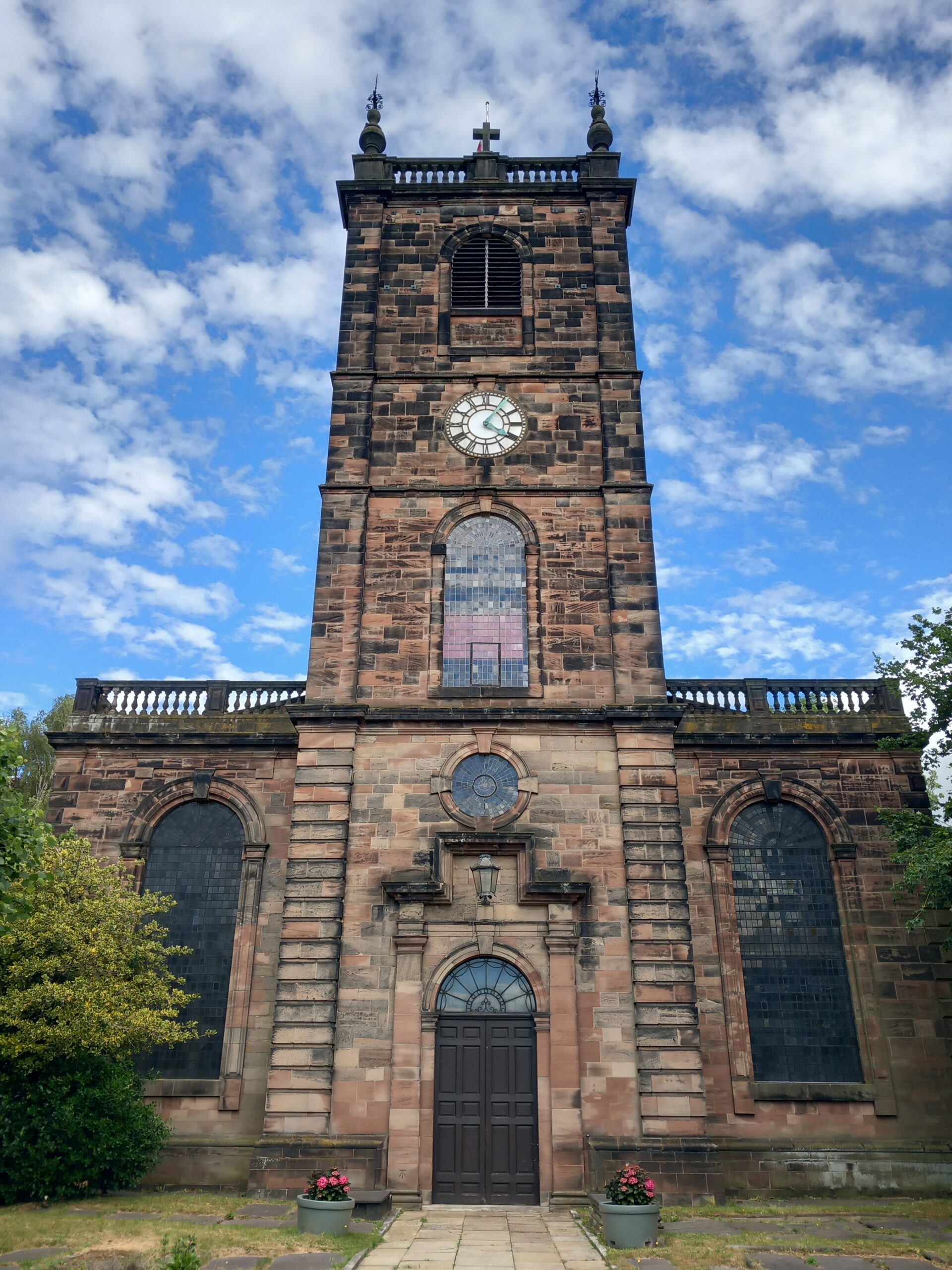
The story of St Modwen continues into the heart of modern Burton. The medieval abbey church eventually fell into disrepair, and in 1718 it was considered unsafe. It was decided that a new church should be built.
The present St Modwen’s Church began to take shape in 1719. During its construction, the congregation used the market hall for worship.
The first services in the new church took place in 1723, although the building was not fully completed until 1728.
Historic England records the church as a Grade I listed building, first listed on 24 March 1950. It describes the church as a Palladian parish church dating from 1719–1726, begun by William and Richard Smith of Tettenhall and completed by Francis Smith.
The church we see today is therefore more than 300 years old, while standing on a site with religious associations stretching back much further.
Its red sandstone architecture and Georgian character give Burton a striking historic landmark overlooking the Market Place.
A Church at The Heart of Burton
St Modwen’s Church has remained an important part of Burton upon Trent for centuries. The church’s own history describes the site as having been a place of worship since the 7th century, while the present building has served the town since 1723.
The church also occupies an important position in relation to the former Burton Abbey. The abbey was founded in 1002, and although most of the medieval complex has disappeared, elements of the historic abbey survive elsewhere in Burton.
For visitors today, this means that a walk through central Burton can reveal layers of history spanning more than a thousand years.
The People Behind Burton’s History
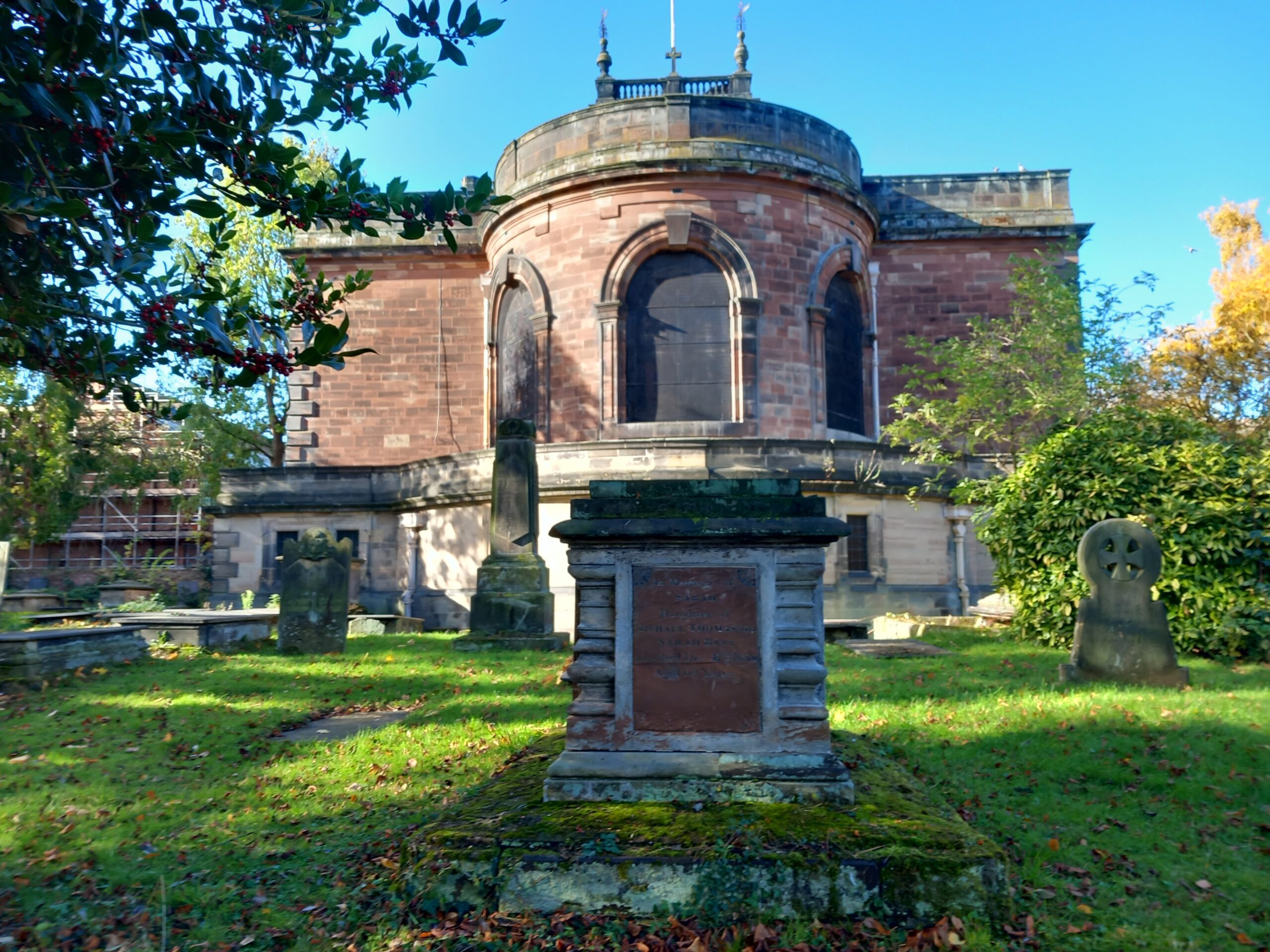
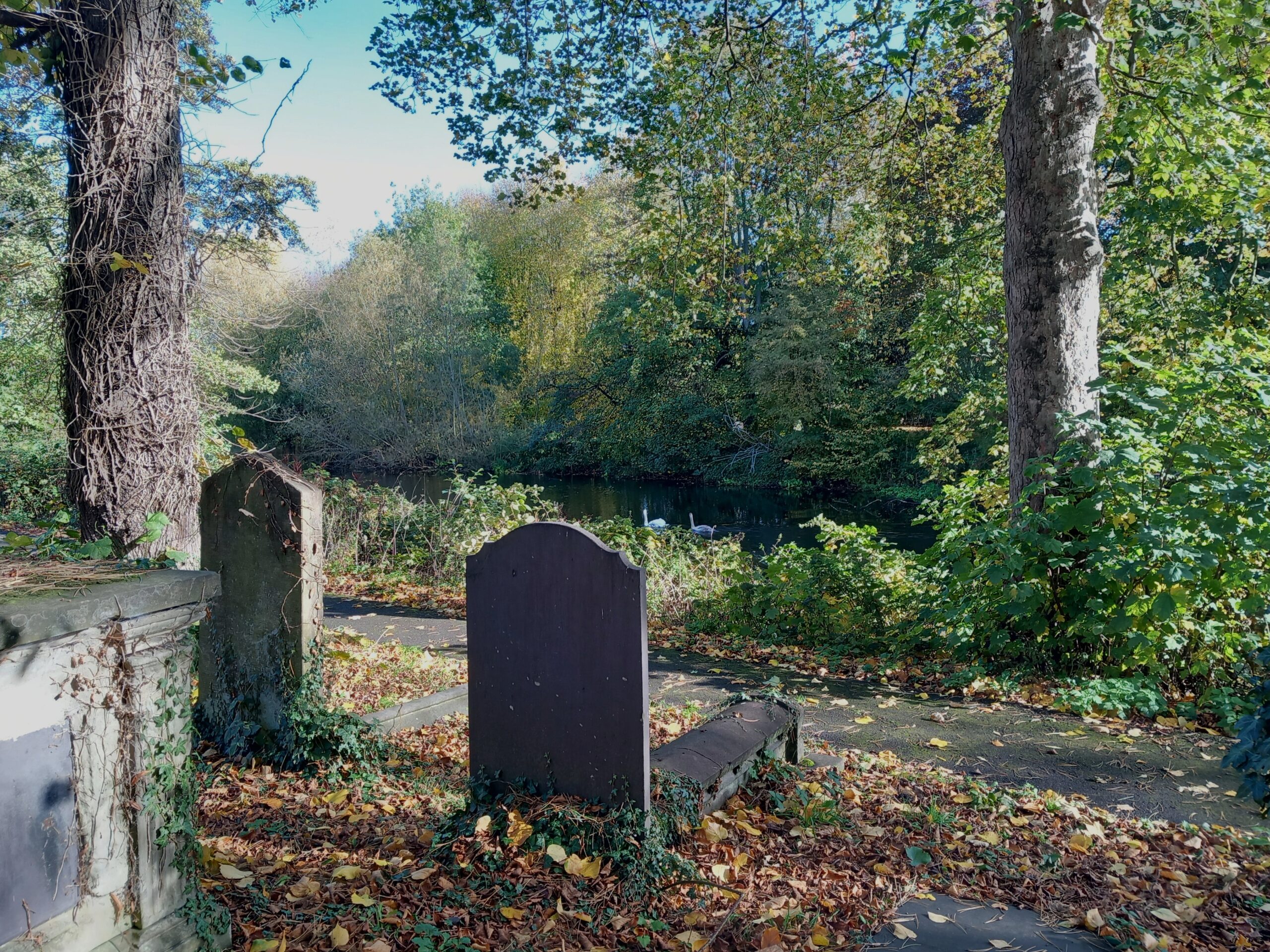
The churchyard at St Modwen’s is also the final resting place of people from some of Burton upon Trent’s most prominent families. Among the graves are members of the Bass family, including Michael Thomas Bass, as well as members of the Marston family, including Henry Edward Marston and John Marston, and the Salt family, including Thomas Salt and Thomas Fosbro Salt. These memorials provide a fascinating link between the church and the families who played an important role in Burton’s commercial and industrial history.
The churchyard contains many other historic graves and memorials, reflecting the people who lived, worked and helped shape Burton over the centuries. St Modwen’s own records include hundreds of headstones and burial records, making the churchyard an important resource for discovering the personal stories behind Burton’s wider heritage.
A Victorian View of St Modwen’s Legacy
The story of St Modwen is also reflected in Burton’s later religious history. The Roman Catholic St Mary and St Modwen Church in Guild Street was built in 1878–79, following an earlier Catholic school-chapel that had opened in 1852.
Its dedication to St Modwen demonstrates that her name continued to have a place in Burton’s religious identity long after the medieval abbey had disappeared.
Today, visitors can therefore find two churches in Burton carrying the name of St Modwen, reflecting different chapters in the town’s religious history.
Discover St Modwen Beside The River Trent
St Modwen’s story is not confined to church buildings and historical records. The River Trent and Andressey remain important to understanding her place in Burton’s heritage.
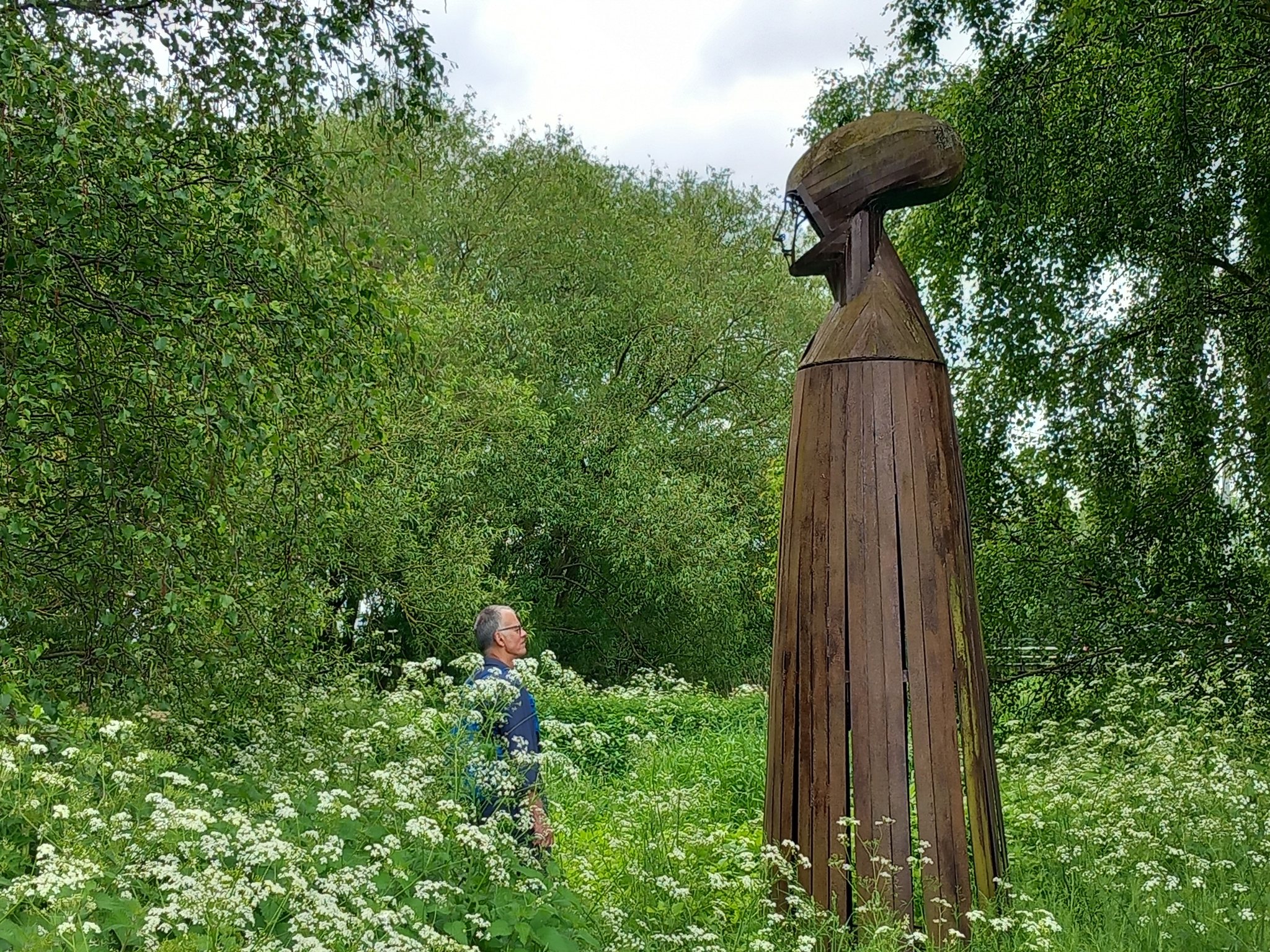
On the Washlands, visitors can find a striking modern sculpture celebrating St Modwenna. Created by artist John Fortnum and unveiled in 1995, the sculpture stands around 14 feet high.
Made from steel, wood and brass, the sculpture is designed to move with the wind, creating sound as its steel elements sway.
It offers a very different way of encountering the story of St Modwen, not inside a church or museum, but out in the landscape alongside the River Trent.
St Modwen’s Day
St Modwen remains part of Burton’s living heritage. The parish church traditionally celebrates St Modwen’s Day on 29 October, although historical sources indicate that the date has changed a number of times over the centuries.
Her legacy can be encountered throughout Burton, from the Market Place and St Modwen’s Church to Andressey, the River Trent, Stapenhill Gardens and the Washlands.
Discover Burton’s Story
Saint Modwen’s story is a remarkable thread running through the history of Burton upon Trent.
From the traditional 7th-century settlement on Andressey and the foundation of Burton Abbey in 1002, through the medieval shrine, the Dissolution in 1538, the building of the present St Modwen’s Church from 1719, and the modern sculpture unveiled in 1995, her name has remained part of Burton’s identity.
Whether you are interested in medieval history, architecture, riverside walks, local legends or the people and stories that have shaped East Staffordshire, exploring St Modwen offers a fascinating way to discover Burton upon Trent.
So, next time you are in Burton, look beyond the town’s famous brewing heritage and discover another part of its story, the enduring heritage of Saint Modwen.

Many of these locations are featured in out heritage trails…
Download Our Free Trail App Today!
Don’t forget to take your guide with you! Download the Discover East Staffordshire Trails App, available on iPhone and Android, to explore walking routes, discover public art, uncover hidden gems and find even more amazing places to visit across East Staffordshire.
Download the Discover East Staffordshire Trails App today, and start your next adventure!