

When people think of Burton upon Trent, one thing immediately springs to mind – beer.
For more than 250 years, this Staffordshire town has been synonymous with brewing, producing ales that were exported across Britain and around the globe. But Burton’s success wasn’t simply down to its famous mineral-rich water. It was also built on one of Britain’s greatest engineering achievements – the Trent & Mersey Canal.
Without the canal, Burton might never have become the brewing capital of the world.
The Water That Made Burton Famous
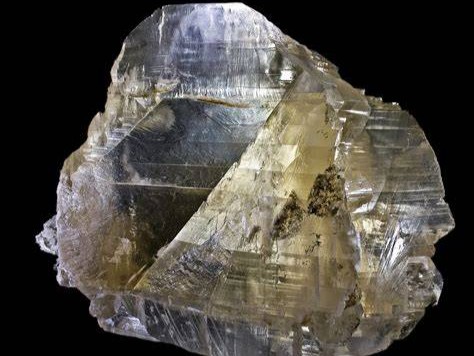
Gypsum
Burton upon Trent sits above layers of gypsum-rich rock, giving the town’s water a unique balance of minerals. Brewers discovered that this water was perfect for producing pale ales, creating beers with a distinctive crisp, hoppy character that became famous around the world. Even today, brewers across the globe still “Burtonise” their water by adding minerals to replicate Burton’s unique brewing conditions.
By the nineteenth century, Burton had become Britain’s brewing powerhouse. Around 30 breweries operated in the town, employing thousands of people and exporting beer across Europe, the British Empire and beyond.
William Bass and the Rise of a Brewing Empire
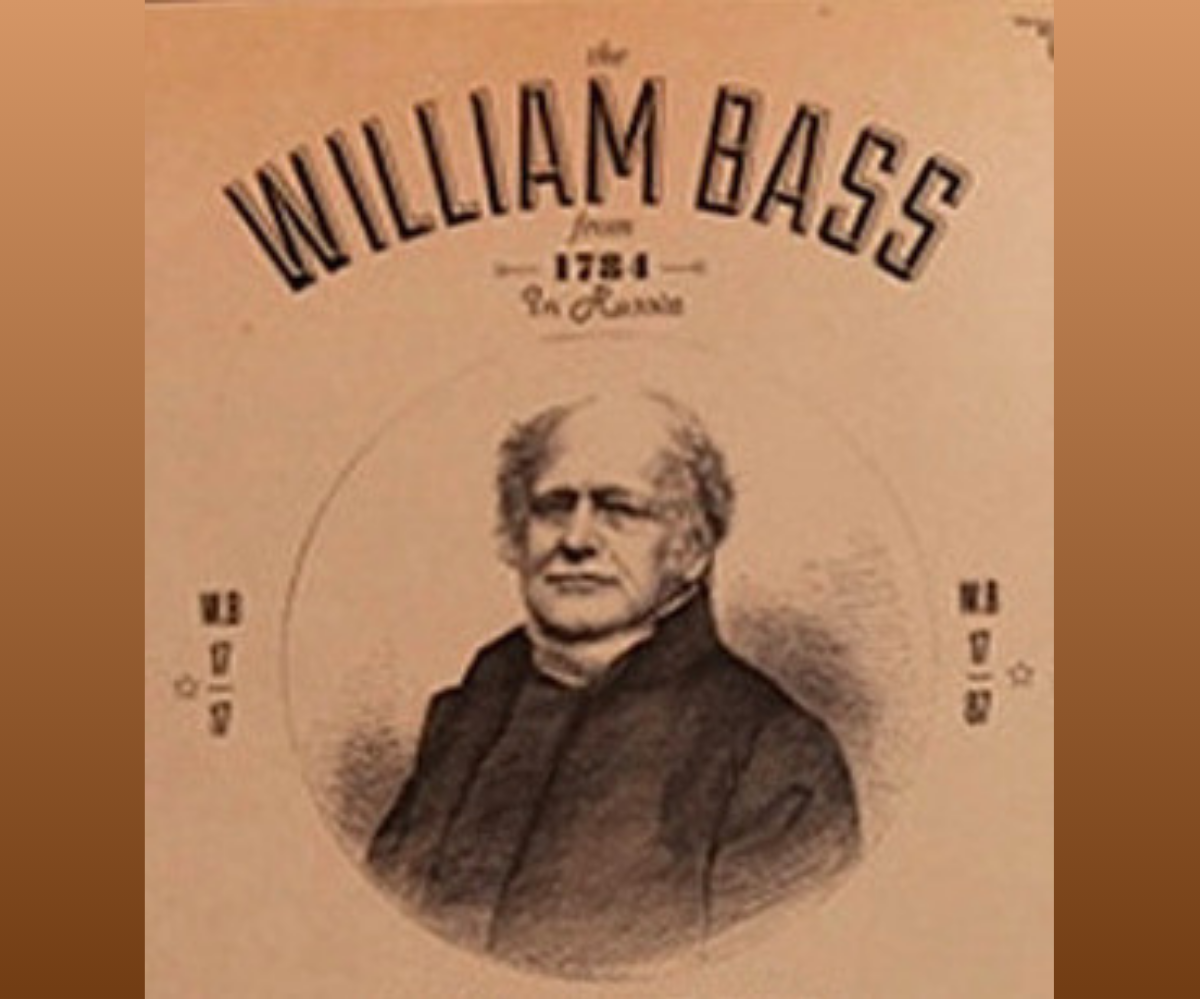
William Bass
No name is more closely associated with Burton upon Trent than William Bass.
Born in 1717, Bass began his working life as a carrier, transporting goods across the Midlands and beyond. His experience moving cargo gave him a valuable understanding of Britain’s growing transport network and the opportunities created by improved communications. In 1777, the same year the Trent & Mersey Canal was completed, William Bass founded Bass & Company in Burton, laying the foundations for what would become one of the world’s most successful breweries.
Following William’s death, his son Michael Thomas Bass transformed the business into an international brewing empire. Bass beers were first exported to Russia and the Baltic before becoming famous throughout the British Empire. The brewery’s reputation for producing high-quality pale ales helped establish Burton upon Trent as the brewing capital of the world.
Bass was not alone. During the nineteenth century, Burton became home to a remarkable concentration of world-famous breweries, each contributing to the town’s extraordinary success.
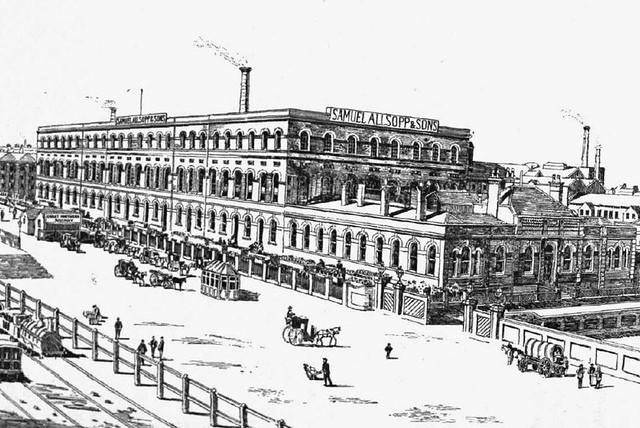
Allsop’s Factory, Burton upon Trent. credit NBC
Alongside Bass, Allsopp’s Brewery played a major role in making Burton upon Trent the brewing capital of the world. Founded by Samuel Allsopp in 1730, the brewery became famous for producing high-quality pale ales and was one of the pioneers of India Pale Ale (IPA).
During the eighteenth century, British brewers needed a beer that could survive the long sea journey to India. Allsopp’s developed a strong, heavily hopped pale ale that travelled exceptionally well, helping establish the beer style that would become known around the world as IPA.
The success of Allsopp’s was closely linked to the Trent & Mersey Canal, completed in 1777 by the pioneering engineer James
Brindley. The canal allowed essential supplies such as barley, hops, coal and timber to reach Burton more easily, while finished barrels of beer could be transported safely to ports and markets across Britain and the British Empire.
As the brewery expanded, Allsopp’s became one of Burton’s largest employers, supporting generations of brewers, maltsters, engineers and coopers who crafted the oak barrels needed to store and transport the town’s famous ales.
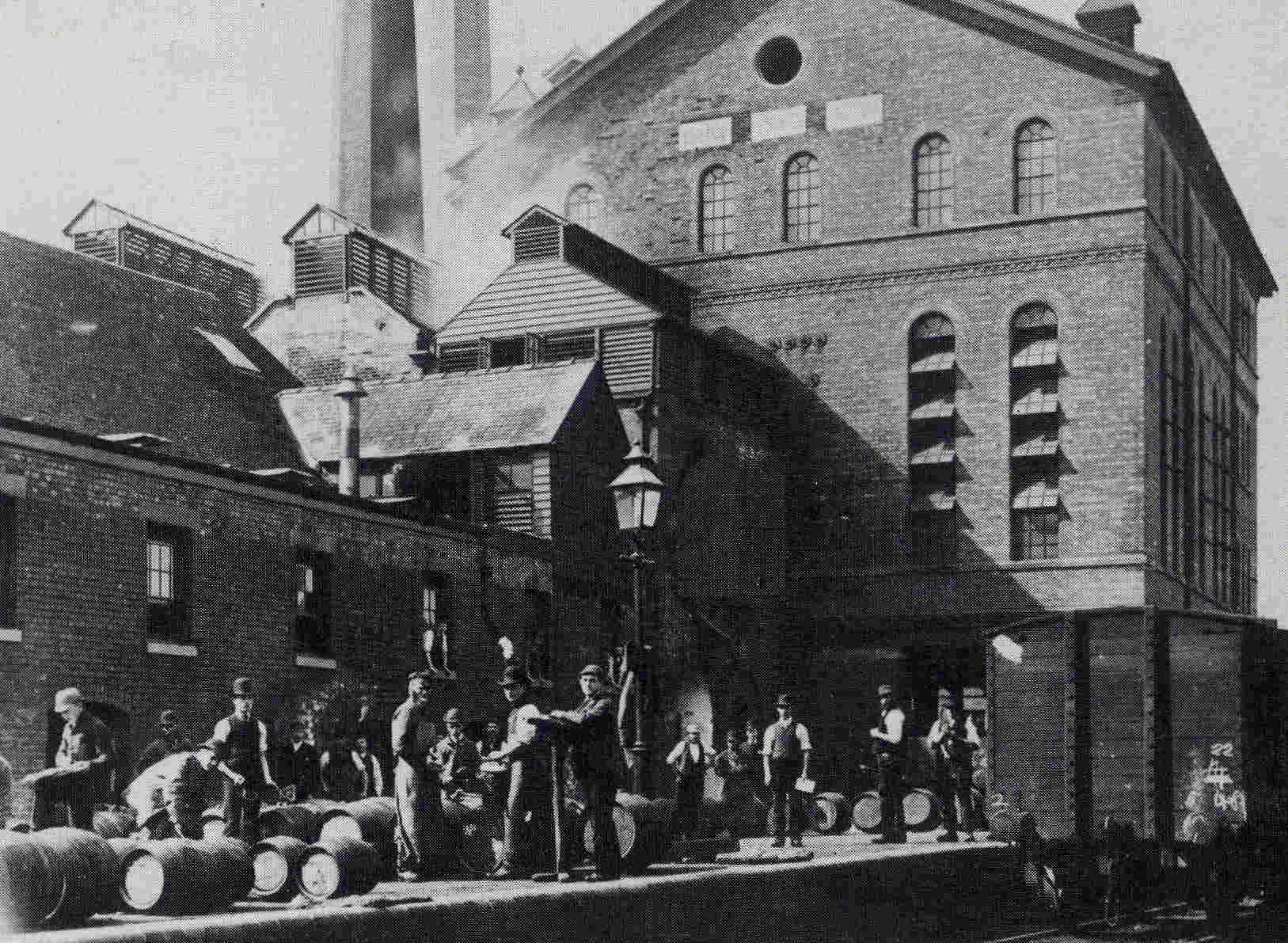
Worthington Factory, Burton upon Trent. credit NBC
Worthington & Co. was another of Burton upon Trent’s legendary breweries and played an important role in establishing the town’s worldwide reputation for brewing. Founded by William Worthington in 1761, the brewery grew from a small local operation into one of the largest and most respected names in British brewing.
Worthington became famous for producing high-quality pale ales and for its contribution to brewing innovation. The brewery developed a reputation for consistency and craftsmanship, helping to strengthen Burton’s position as a centre of brewing excellence alongside Bass and Allsopp’s.
Like its rivals, Worthington’s success was closely connected to the Trent & Mersey Canal. The canal provided a vital transport link, bringing in barley, hops, coal and other supplies while allowing finished barrels of beer to be shipped efficiently to towns, ports and overseas markets.
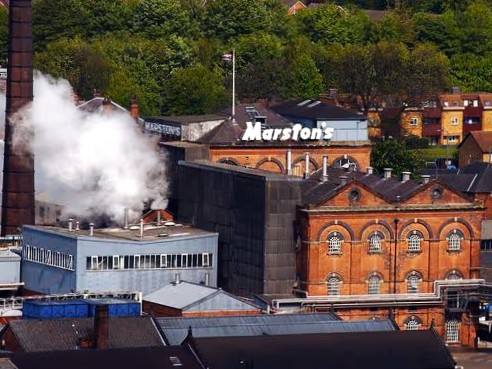
Marston’s Factory, Burton upon Trent
Marston’s Brewery is one of the great surviving names in Burton upon Trent’s brewing story. Founded in 1834 by John Marston, the brewery began as a small local operation before growing into one of the town’s most respected brewing companies.
Still sitting alongside the Trent & Mersey Canal today, Marston’s success was built on the same foundations that made Burton famous: skilled brewing, high-quality ingredients and the unique mineral-rich water of the River Trent valley. Like Bass, Allsopp’s and Worthington, Marston’s benefited from the arrival of the Trent & Mersey Canal, which opened in 1777 and transformed the way goods moved across the Midlands.
The canal provided Burton’s breweries with a reliable route for transporting barley, hops, coal and timber, while allowing barrels of finished beer to travel to markets across Britain. Behind every
barrel were generations of skilled workers, including brewers, maltsters and coopers, whose craftsmanship helped create Burton’s worldwide reputation.
One of Marston’s most famous traditions is Pedigree, a classic Burton pale ale brewed using the historic Burton Union fermentation system. This unique method, introduced in the nineteenth century, uses a series of oak barrels connected together to create a distinctive character and flavour. Today, Marston’s is one of the few breweries in the world still using this traditional technique.
Although many of Burton’s historic breweries have disappeared or merged over time, Marston’s continues the town’s proud brewing heritage. Its working brewery provides a living link between the industrial past, the canal network and the generations of craftsmen who helped make Burton upon Trent famous.
The Burton Cooper

The Burton Cooper Sculpture, 1977
Behind every successful brewery was another highly skilled trade – the coopers. Before beer could be transported, it had to be stored in strong wooden barrels, casks and hogsheads, all made by hand. Burton was home to hundreds of coopers whose workshops echoed with the sound of hammers shaping oak staves into watertight barrels. It was highly skilled work, requiring precision and experience, as every barrel had to withstand long journeys by canal, horse-drawn wagon and sailing ship without leaking.
The demand for barrels was enormous. At the height of Burton’s brewing industry, thousands of casks were being made, repaired and reused every year. Large breweries employed teams of coopers whose job was to build new barrels, inspect returned casks and
repair any damage before they were filled again. A well-made oak barrel could remain in service for many years, making coopering one of the town’s most important industries alongside brewing itself.
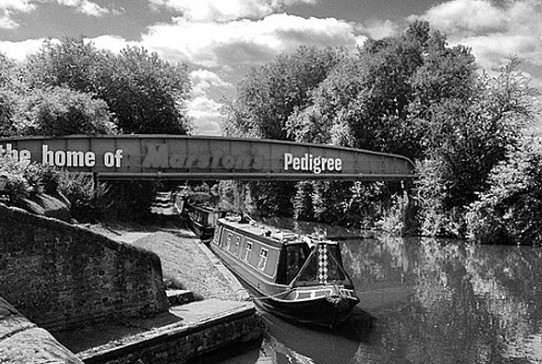
Marston’s Bridge, Shobnall.
The Trent & Mersey Canal was the lifeblood of this thriving trade. Narrowboats brought barley, hops, timber, coal and other raw materials into Burton before leaving loaded with rows of carefully stacked wooden barrels filled with beer. The canal’s smooth journey was far gentler than the rough roads of the eighteenth century, reducing the risk of damaging both the precious ale and the barrels that carried it. Boatloads of Burton beer travelled to Hull, Liverpool and London before being shipped across Europe, the British Empire and beyond.
By the late Victorian period, Burton upon Trent was producing around a quarter of all the beer brewed in Britain. Its pale ales were recognised across the world, and the town had become an international centre of brewing, coopering and industrial innovation.
The brewery became so successful that Bass’s famous Red Triangle logo was registered in 1876 as Britain’s first registered trademark, marking a significant moment in British commercial history and reflecting the global reputation of Burton’s brewing industry.
The Canal That Powered an Industry

Potteries narrowboats, Trent and Mersey Canal 1957. credit National Waterways Museum
The Trent & Mersey Canal was engineered by James Brindley, one of Britain’s greatest civil engineers. Originally known as the Grand Trunk Canal, it was authorised by Parliament in 1766 and completed in 1777. Brindley’s vision was to create a waterway linking the River Mersey with the River Trent, providing a reliable inland transport route across England.
For Burton’s brewers, the canal was revolutionary.
Horse-drawn narrowboats could carry huge quantities of barley, hops, malt and coal into the town before leaving loaded with barrels of Burton ale destined for cities, ports and export markets. Compared with the rough roads of the eighteenth century, canal transport was cheaper, faster and far gentler on valuable cargo. The canal became the motorway of the Industrial Revolution, helping Burton’s breweries grow into international businesses.
The Stoke on Trent Connection

Josiah Wedgwood, World of Wedgwood Factory & Museum
The story of Burton’s beer cannot be separated from the story of Stoke-on-Trent and the pottery industry.
One of the canal’s greatest champions was Josiah Wedgwood, the visionary potter whose factories at Etruria produced some of the finest ceramics in Europe. Wedgwood knew that transporting fragile pottery by road resulted in costly breakages, so he campaigned tirelessly for the construction of the Trent & Mersey Canal. The new waterway allowed delicate china to travel safely while also bringing in the clay, flint and coal needed to keep the kilns burning.
Thanks to Brindley’s engineering and Wedgwood’s determination, the canal became a lifeline for both Burton’s breweries and Stoke-on-Trent’s potteries. Beer travelled one way; pottery travelled the other. Together they helped power Britain’s Industrial Revolution.
James Brindley | Visionary The Engineer Who Connected England

James Brindley Statue, Euturia Industrial Museum
The story of Burton upon Trent’s brewing success is also the story of one of Britain’s greatest engineers – James Brindley, the man who created the waterway that helped transform the Industrial Revolution.
Born in 1716 in Derbyshire, Brindley began his career as a millwright before becoming one of the most innovative canal engineers of the eighteenth century. At a time when roads were poor and transporting heavy goods was slow and expensive, he believed that a network of navigable waterways could revolutionise industry.
Brindley was chosen to design the Trent & Mersey Canal, originally known as the Grand Trunk Canal, which was authorised by Parliament in 1766 and completed in 1777. His ambitious plan was to create a continuous water route linking the River Mersey in Cheshire with the River Trent in Staffordshire, connecting the
growing industrial centres of the Midlands with major ports.
The canal was a remarkable engineering achievement. Brindley’s route included tunnels, aqueducts, locks and cuttings through some of England’s most challenging landscapes. His work included the original Harecastle Tunnel, Preston Brook Tunnel and the famous lock flights that allowed boats to cross the changing terrain of Cheshire and Staffordshire.
The impact of Brindley’s canal was enormous. It allowed industries such as Stoke-on-Trent’s pottery manufacturers, Cheshire’s salt producers and Burton upon Trent’s breweries to transport raw materials and finished goods more efficiently than ever before. Pottery, coal, salt and beer could all travel safely along the same waterway, helping towns along the route grow into industrial centres of international importance.
Brindley’s partnership with influential industrialists such as Josiah Wedgwood was particularly important. Wedgwood recognised that a canal was essential for transporting fragile ceramics from Stoke-on-Trent, while Burton’s brewers benefited from the reliable movement of barley, hops, coal and barrels. Together, engineers and entrepreneurs created a transport network that helped shape modern Britain.
Sadly, Brindley did not live to see the canal fully completed. He died in 1772, five years before the official opening, but his vision had already changed the future of British industry. His pioneering work earned him a place as one of the founding figures of the canal age.
Today, as boaters travel the Trent & Mersey Canal, they follow the same route designed by Brindley more than 250 years ago, a journey through the landscapes, industries and communities that his engineering genius helped connect.
Did you know?
James Brindley was largely self-taught and became known as the “Father of the English Canal System” after creating some of Britain’s earliest and most important waterways.
A Lasting Legacy
Although railways eventually overtook the canals for commercial transport, Burton’s brewing heritage remains an important part of the town’s identity. Historic brewery buildings still dominate the skyline, while attractions such as the Claymills Victorian Pumping Station, Barton Marina, the nearby Trent & Mersey Canal offer visitors a glimpse into the town’s extraordinary industrial past.
Today, the canal carries holiday boats instead of beer barges, but as you stroll along the towpath or watch narrowboats pass through Burton, it’s easy to imagine the bustling waterway of the nineteenth century. Every barrel of ale, every sack of malt and every cargo boat tells part of the story of how visionary engineers, determined entrepreneurs and skilled craftsmen transformed a quiet riverside town into the brewing capital of the world.
Discover the Trent & Mersey Canal
Whether you’re planning a weekend cruise or the adventure of a lifetime, the Trent & Mersey Canal offers one of the most rewarding journeys on Britain’s inland waterways. Stretching for 93 miles from Preston Brook in Cheshire to Trent Lock in Derbyshire, this historic canal winds through beautiful countryside, charming market towns and places that helped shape the Industrial Revolution.
Along the way you’ll experience some of the country’s most remarkable canal engineering, including the spectacular Anderton Boat Lift, the famous Heartbreak Hill Locks, the atmospheric Harecastle Tunnel, and the historic Preston Brook and Saltersford Tunnels. Cruise through the world-famous Potteries of Stoke-on-Trent, where the canal helped transport the ceramics of Josiah Wedgwood to the world, before exploring the elegant gardens at Trentham, the bustling canal town of Stone, the stunning Shugborough Estate at Great Haywood, the peaceful wildlife of Wolseley Nature Reserve, and the lively waterways at Fradley Junction.
Further along the route, discover the brewing heritage of Burton upon Trent, relax at Barton Marina, and finish your journey in the beautifully preserved canal village of Shardlow, once one of Britain’s busiest inland ports, before reaching Trent Lock, where four historic waterways meet.
With welcoming canalside pubs, picturesque marinas, fascinating museums, scenic walks, family attractions and abundant wildlife, the Trent & Mersey Canal has something for everyone. Every mile reveals another story, from Roman salt towns and Victorian engineering to magnificent country estates and thriving nature reserves.