
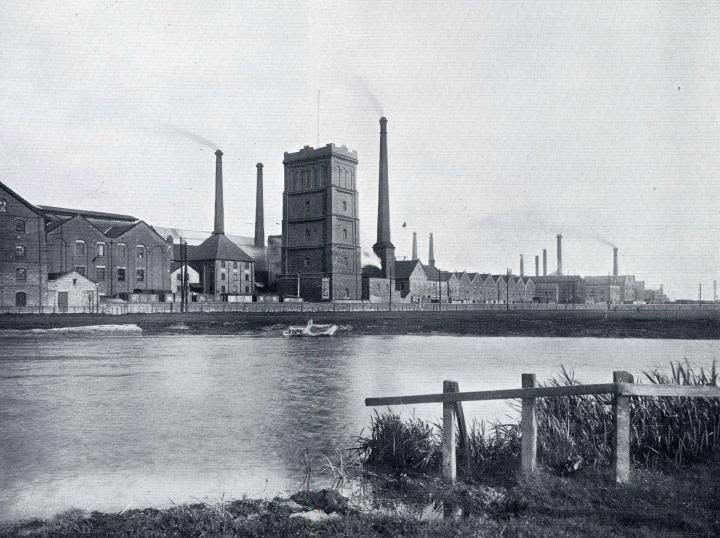
Rising above Burton upon Trent, the striking red-brick Bass Water Tower is one of the town’s most recognisable reminders of its extraordinary brewing past.
But there is an interesting detail behind the name. While it is popularly known today as the Bass Water Tower, historic records describe it more precisely as the Old Brewery Water Tower and, in Historic England’s official listing, as the Water Tower About 100 Metres to Rear of Offices of Bass’s Brewery. It was the water tower of Bass’s Old Brewery, a distinction that helps reveal just how much of Burton’s historic brewing landscape has disappeared around it.
Built in 1866, the tower has now stood for more than 150 years. It is not simply an impressive Victorian structure: it is a surviving fragment of the brewery complex that helped transform Burton upon Trent into one of the world’s great brewing towns.
Built in the age of Bass
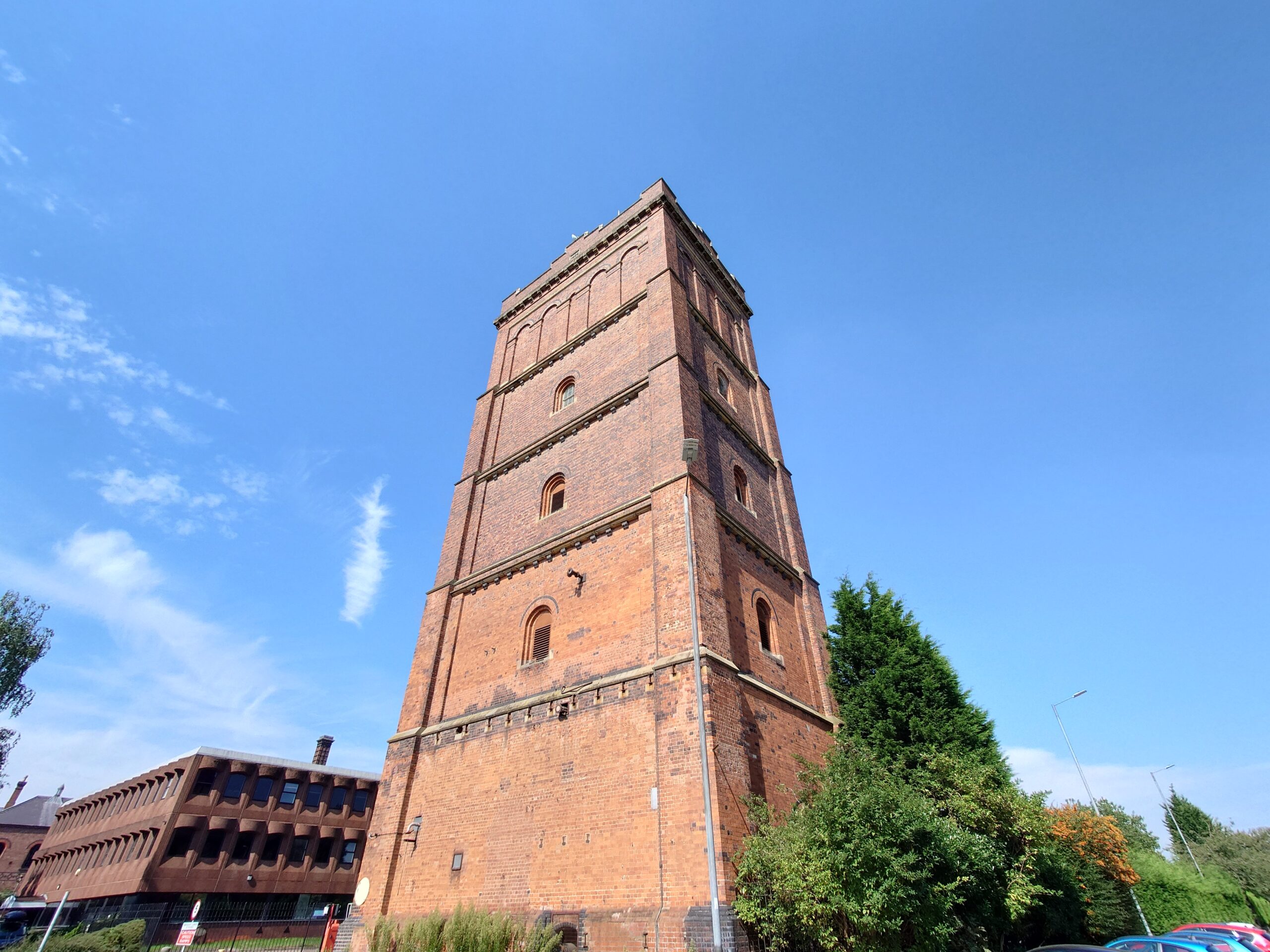
To understand the story of the tower, we need to go back to 1777, when William Bass founded the brewery that would eventually become one of Britain’s most famous brewing companies.
Over the following century, Bass expanded dramatically. Its original brewery, eventually known as the Bass Old Brewery, developed to the east of High Street as the company grew into a major industrial force.
By the Victorian period, Burton was experiencing an extraordinary brewing boom. Breweries expanded, new buildings appeared across the town and an increasingly sophisticated network of transport, maltings, warehouses and brewery infrastructure developed to support the industry.
The water tower was constructed in 1866, right in the middle of this period of expansion.
A Tower with a Job to Do
At first glance, the tower’s impressive height and decorative brickwork might make it look like a monument. In reality, it was a practical piece of brewery infrastructure.
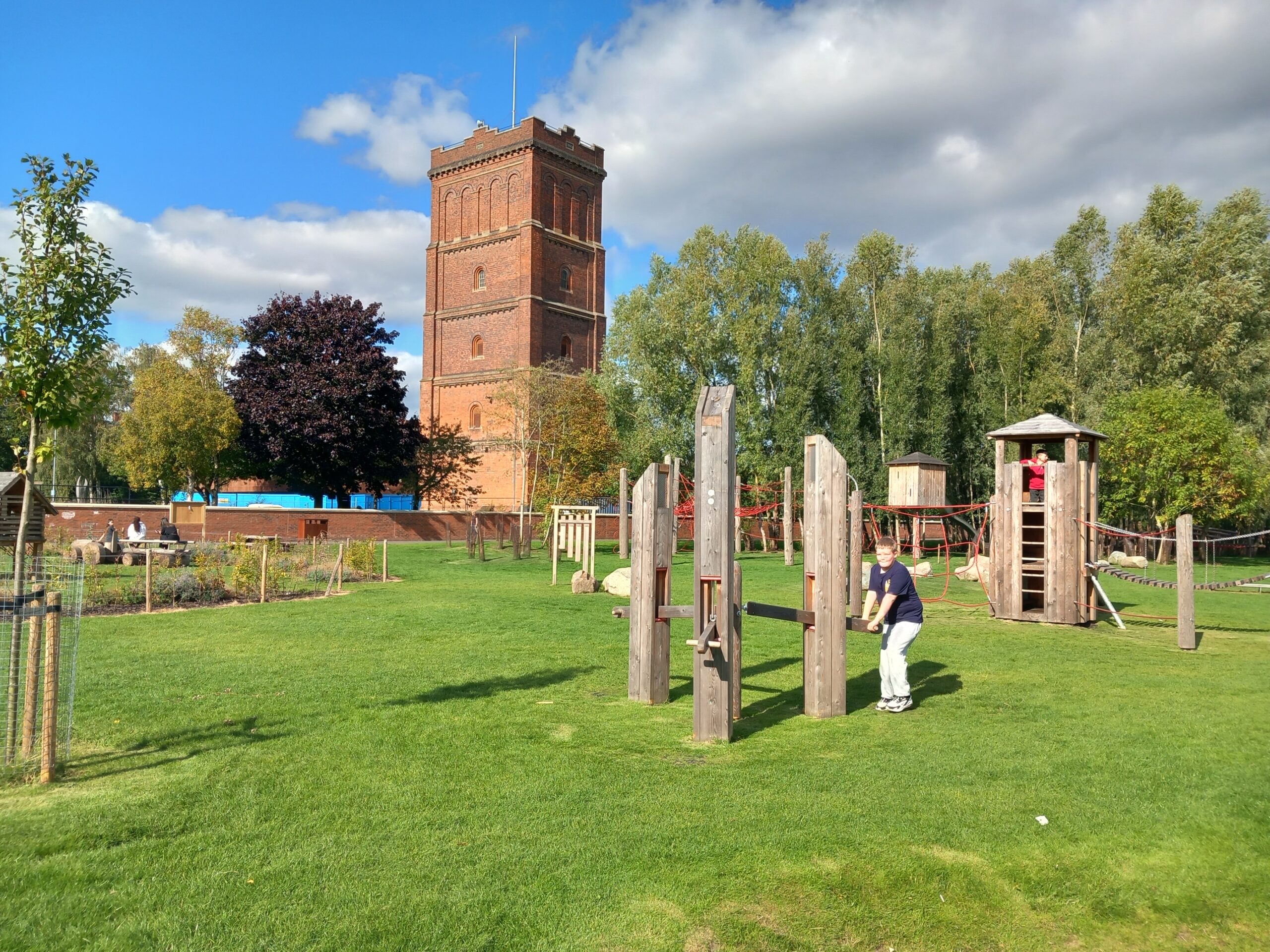
The massive red-brick tower, rectangular in plan and rises through five stages, with stone stringcourses, arched windows and a stepped parapet. The date 1866 is incorporated into the building itself.
Its purpose was connected to the brewery’s water supply.
And water was absolutely fundamental to Burton’s success.
The town’s water was particularly suited to brewing pale ales, including the increasingly popular India Pale Ale. Brewers developed techniques around Burton’s distinctive water chemistry, helping give the town’s beers a reputation that spread across Britain and around the world.
So, although it may look like a grand Victorian landmark today, the tower was ultimately part of the machinery of brewing, a reminder that behind every famous pint was an enormous industrial operation.
Burton Becomes a Brewing Powerhouse
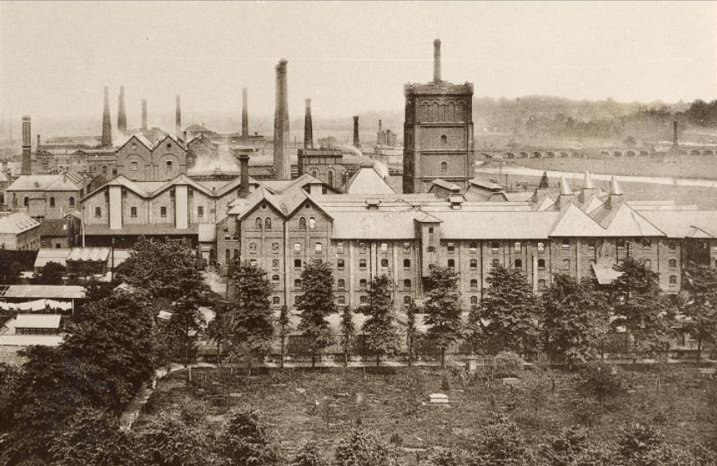
During the 19th century, Burton upon Trent was transformed by brewing.
The Bass Old Brewery was just one part of an astonishing concentration of brewing businesses. Other major names, including Allsopp, Worthington and Ind Coope, also established large-scale operations in the town.
Historic England describes Burton’s brewing industry as reaching its peak in the 1880s, when the town had become renowned worldwide for its beer.
The scale of the industry was remarkable. Photo Credit Staffordshire Past Track
Bass itself had grown from William Bass’s 18th-century enterprise into a huge brewing company. Its Old Brewery was continually developed and reconstructed as production increased, while additional Bass breweries were established elsewhere in Burton.
The Bass Water Tower belonged to this era of ambition and expansion.
Imagine Burton in the late Victorian period: brewery buildings filling the town centre, huge quantities of malt and hops moving through the town, railway traffic carrying beer across the country and thousands of people working in brewing and related industries.
The tower would have been part of that busy industrial landscape.
The Old Brewery Disappears, but The Tower Survives
Perhaps the most fascinating part of the tower’s story is that it survived the disappearance of the brewery complex around it.
The Bass Old Brewery was reconstructed in 1884–85, but eventually the historic complex was demolished in 1971. The water tower, however, survived, along with the Bass offices.
That makes the tower especially valuable today.
It is not simply an old building. It is a surviving piece of a much larger landscape that has largely vanished.
For anyone interested in Burton’s heritage, this makes the tower something of a heritage time capsule. It allows visitors to look at the town today and imagine the extraordinary scale of the brewing industry that once dominated it.
Look Closely at The Architecture
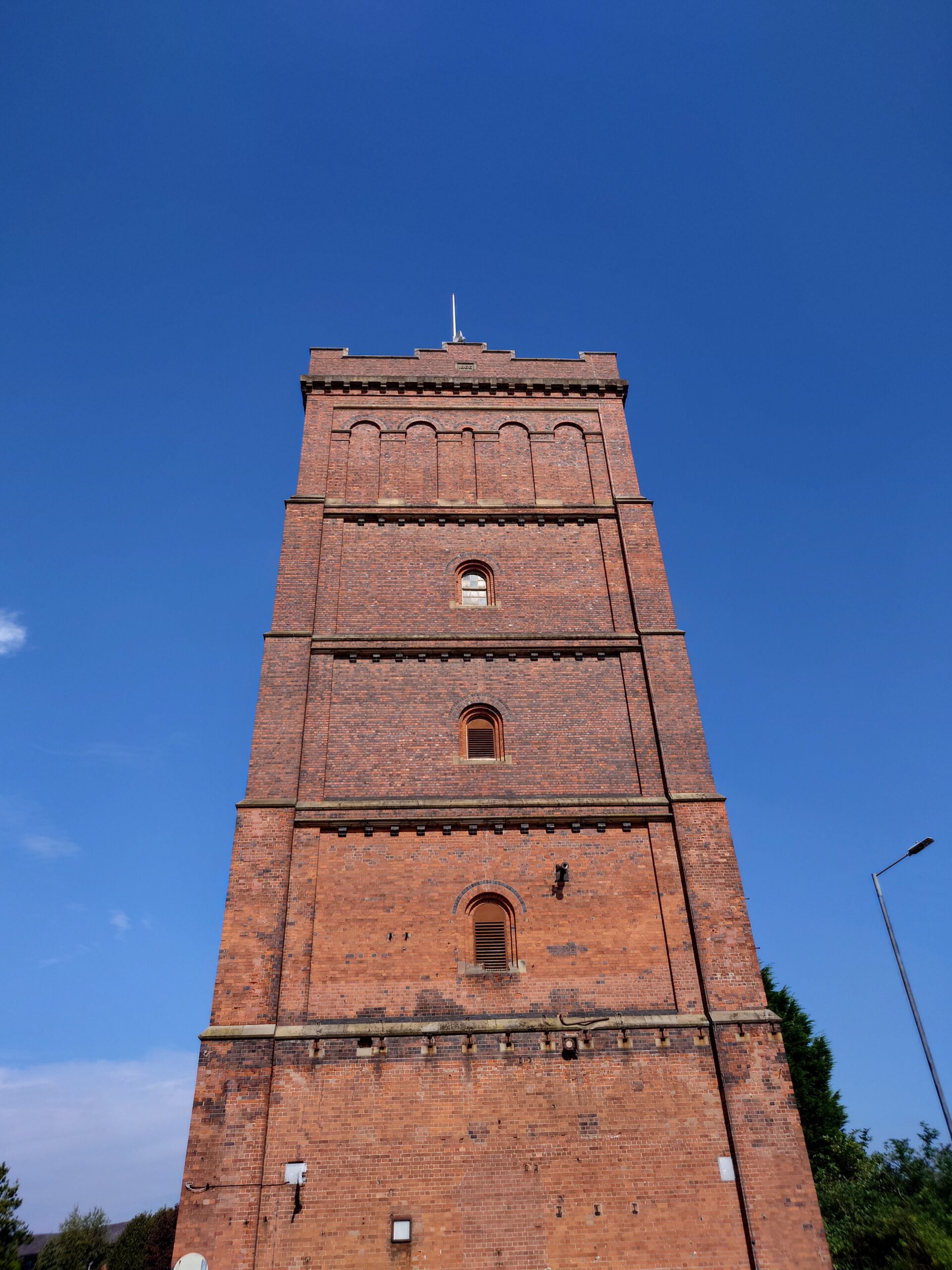
The tower deserves a closer look.
Its red-brick construction is typical of Burton’s historic brewery architecture, while its five-stage form gives it a strong vertical presence.
Look for the stone stringcourses, the repeated arched windows and the decorative treatment at the top of the building. Historic England also notes the deeply recessed arched doorway on the western side and the tablet bearing the date 1866.
These details demonstrate that even an essentially functional industrial building could be designed with considerable architectural character.
Victorian breweries were not just places where beer was made. They were expressions of commercial confidence, technological progress and civic pride, and the tower reflects that ambition.
A Survivor Worth Protecting
The tower’s importance was formally recognised when it became a Grade II listed building on 22 June 1979.
The tower is one of the surviving physical links to the Bass Old Brewery and to the industrial landscape that helped make Burton famous.
It also sits within a wider collection of surviving brewing heritage across the town, where former brewery buildings, maltings, warehouses and other structures continue to tell the story of Burton’s industrial past.
A Glimpse of the Old Burton
Photographs provide a fascinating way to appreciate the tower.
Staffordshire Past Track records an image of the Old Brewery Water Tower and Well House, photographed from the Worthington Town House Garden in approximately 1980–1985. The photograph is part of the National Brewery Centre collection.
Historic photographs such as this help bring the tower’s surroundings to life, particularly when compared with the landscape visitors see today.
The building therefore has an important role beyond its architecture. It acts as a visual reference point, helping us understand how Burton’s townscape has changed over generations.
Why Call it the Bass Water Tower?
So, should visitors call it the Bass Water Tower?
Absolutely, it is a perfectly understandable and now widely used name.
But from a heritage perspective, there is something rather more interesting in knowing its historic identity.
The tower was associated with Bass’s Old Brewery, and contemporary heritage records refer to it as the Old Brewery Water Tower. Historic England’s formal listing retains a much more descriptive name.
That small distinction opens up a much bigger story.
It reminds us that the tower is a survivor of the Bass Old Brewery, rather than simply a freestanding monument named after the beer company.
A Landmark with a Story to Tell
Today, Burton upon Trent is a modern town, but its brewing heritage remains an important part of its identity.
The Bass Water Tower offers a tangible connection to that past.
Built in 1866, it witnessed the height of Burton’s brewing boom, survived the demolition of the Bass Old Brewery in 1971, and was recognised as a Grade II listed building in 1979.
More than 150 years after it was built, it continues to stand as a reminder of an era when Burton’s name was known around the world for beer.
And perhaps that is what makes it such an appealing heritage landmark.
You don’t need to be a brewing expert to appreciate it. Look at the tower and you are looking at Victorian engineering, industrial ambition and local history, all in one striking building.
The Bass Water Tower may be a survivor from Burton’s brewing past, but its story is still very much part of the town’s future as a fascinating heritage destination.
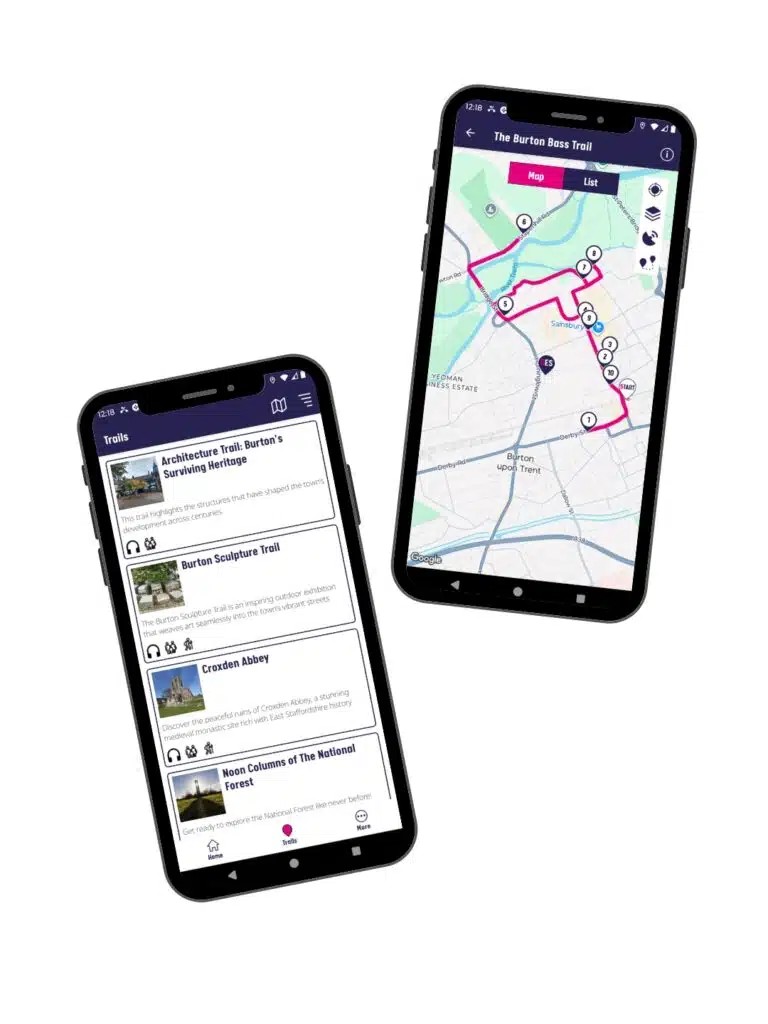
Bass Tower Features in several of our Heritage Trails – Download Our Free Trail App Today!
Don’t forget to take your guide with you! Download the Discover East Staffordshire Trails App, available on iPhone and Android, to explore walking routes, discover public art, uncover hidden gems and find even more amazing places to visit across East Staffordshire.
Download the Discover East Staffordshire Trails App today, and start your next adventure!