
Looking for a day out that combines fresh air, fascinating history, beautiful green spaces and a delicious lunch? Then put on your walking shoes and discover a greener side of Burton upon Trent!
This fantastic route takes you through The Washlands, Burton Mail Centenary Woodlands, Stapenhill Gardens and Stapenhill Hollows, with plenty of wildlife, local stories and unexpected treasures along the way. And when you’ve worked up an appetite, there are three brilliant independent cafés ready to welcome you.
The Washlands | Where the River Comes to Life
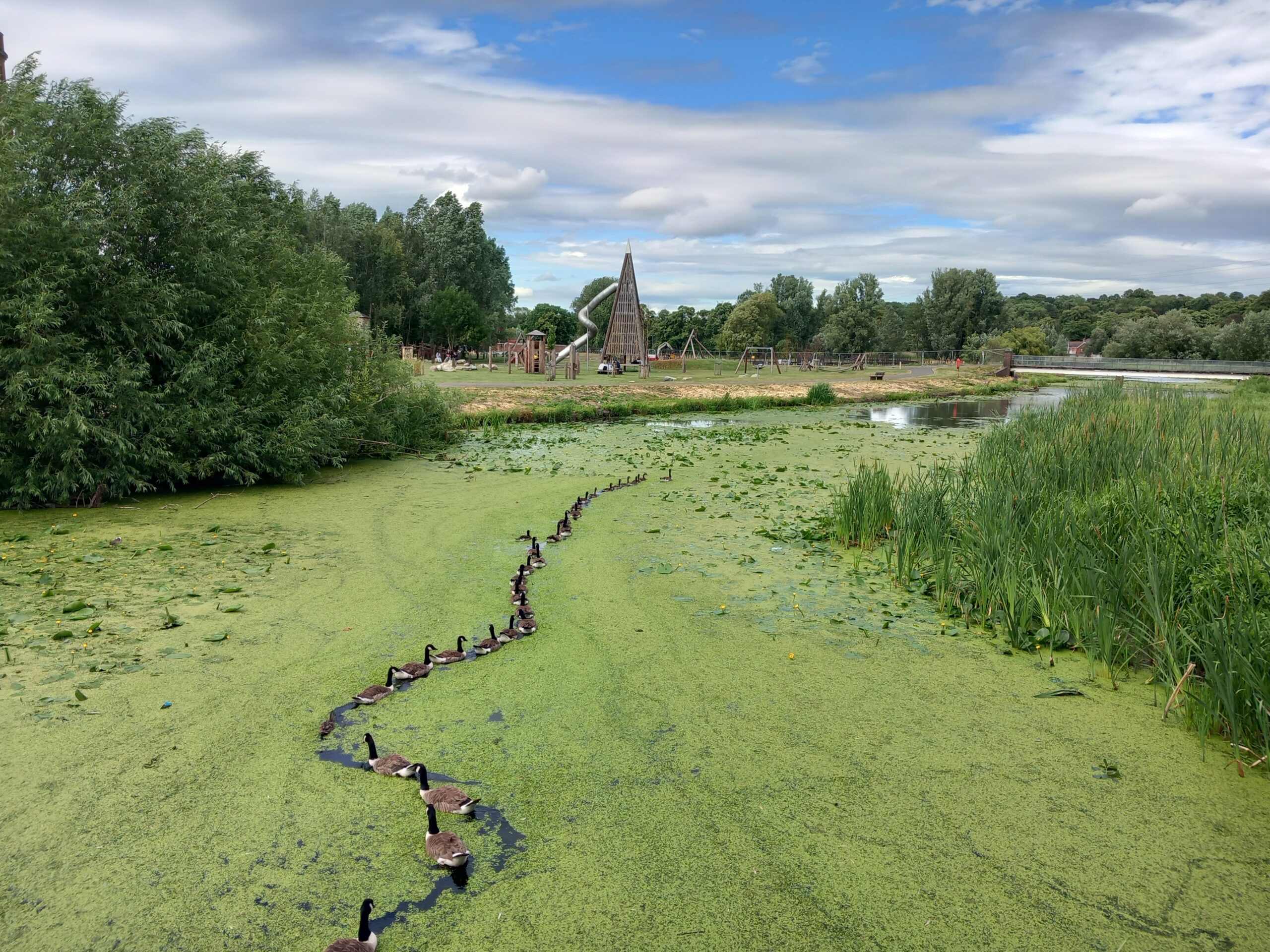
Start your adventure at The Washlands, a huge stretch of riverside floodplain running alongside the River Trent. This isn’t simply a lovely place for a walk – the Washlands have an important job to do.
When the River Trent rises after heavy rainfall, these open areas provide valuable space for water to spread naturally, helping to reduce flood risk elsewhere. The Washlands have also been transformed into an important green corridor, with wetlands, meadows, pools and wildlife-friendly habitats creating a fantastic environment for both nature and people.
There’s plenty to look out for as you explore. The Washlands are home to an impressive variety of wildlife, including herons, snipe, curlew, little egrets, kingfishers and swans. During the warmer months, keep your eyes peeled for dragonflies and damselflies
darting over the water and wetlands. The meadows also attract bees, butterflies and other pollinators, with colourful wildflowers appearing through the seasons.
The boardwalk adds an extra element of adventure to the walk, taking you through the wetland landscape and giving you a different perspective of this fascinating habitat.
And there’s history here too. The Washlands were traditionally used as meadowland for grazing and haymaking, and today they demonstrate beautifully how flood protection, wildlife and recreation can work together.
Keep walking and you’ll soon find yourself heading towards the next stop on your adventure – the Burton Mail Centenary Woodlands.
Andressey Bridge & Island | Where Burton’s Story Begins
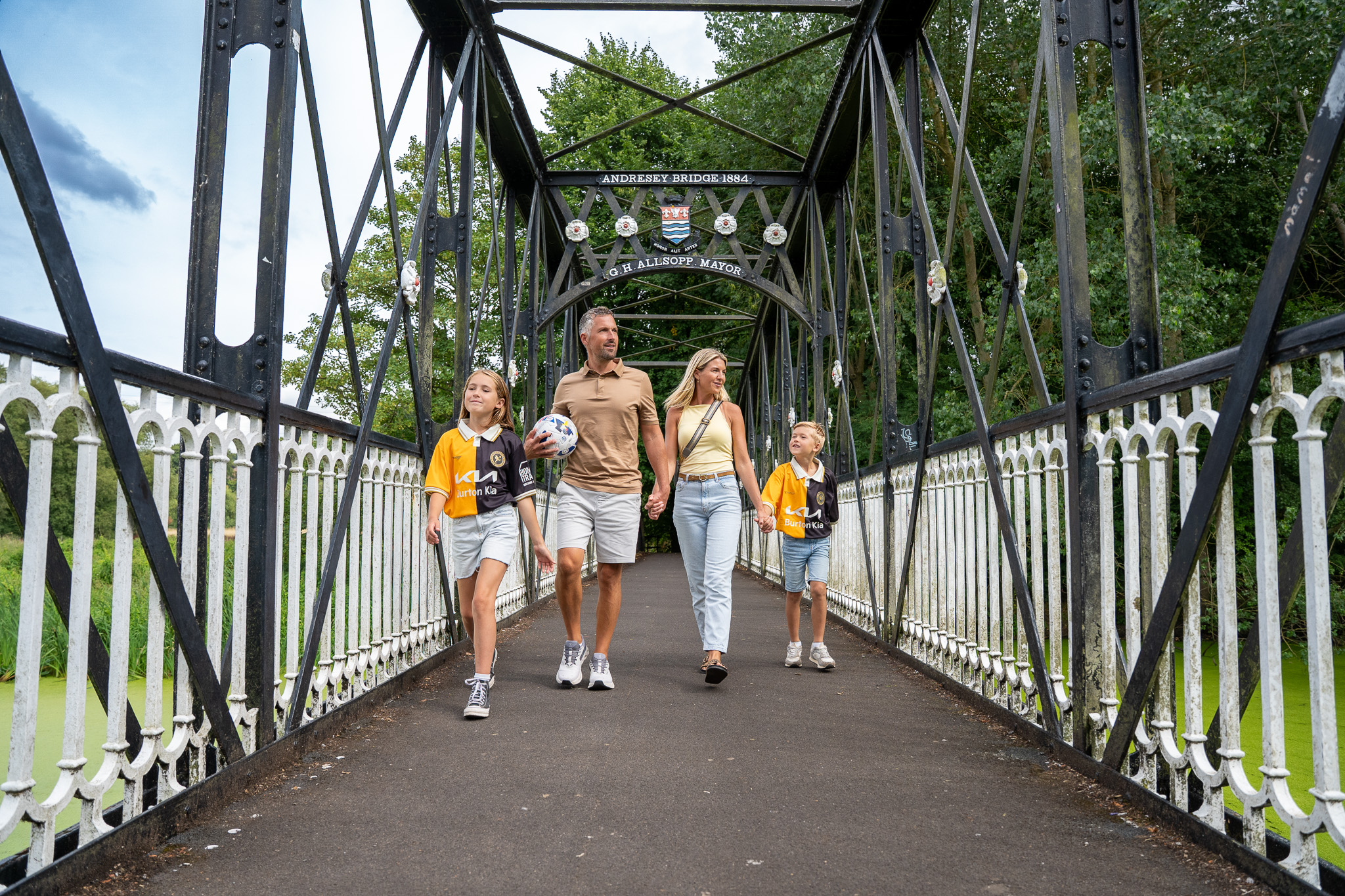
As you leave The Washlands, cross Andressey Bridge and you’ll find yourself stepping into one of the most fascinating chapters of Burton’s history.
The Grade II-listed Andressey Bridge dates from 1884 and is a beautiful single-span iron footbridge, with elegant latticework sides, stone piers and historic cast-iron lamp standards. Look closely at the stonework and you’ll even spot a carved panel featuring the Paget family coat of arms, rescued from Burton’s former Town Hall when it was demolished in 1883.
Crossing the bridge takes you towards Andressey Island, a place with a history stretching back more than a thousand years. The island is closely associated with St Modwen, an Irish religious
woman who, according to local tradition, founded a chapel and religious settlement here in the early medieval period. The chapel was dedicated to St Andrew, giving the island its name, Andressey, meaning Andrew’s Island.
The site remained important for centuries. A chapel dedicated to St Andrew was rebuilt here in the medieval period, while the island was also associated with St Modwen’s Well, whose waters were believed to have healing properties. The well was recorded as a place of pilgrimage and was still known in the 18th century.
Today, Andressey Island is a peaceful riverside spot where you can pause and imagine what this landscape might have looked like hundreds of years ago. The contrast between the modern town, the River Trent and this ancient spiritual landscape makes it a particularly special part of the walk.
Meet St Modwen | A Sculpture with a Story
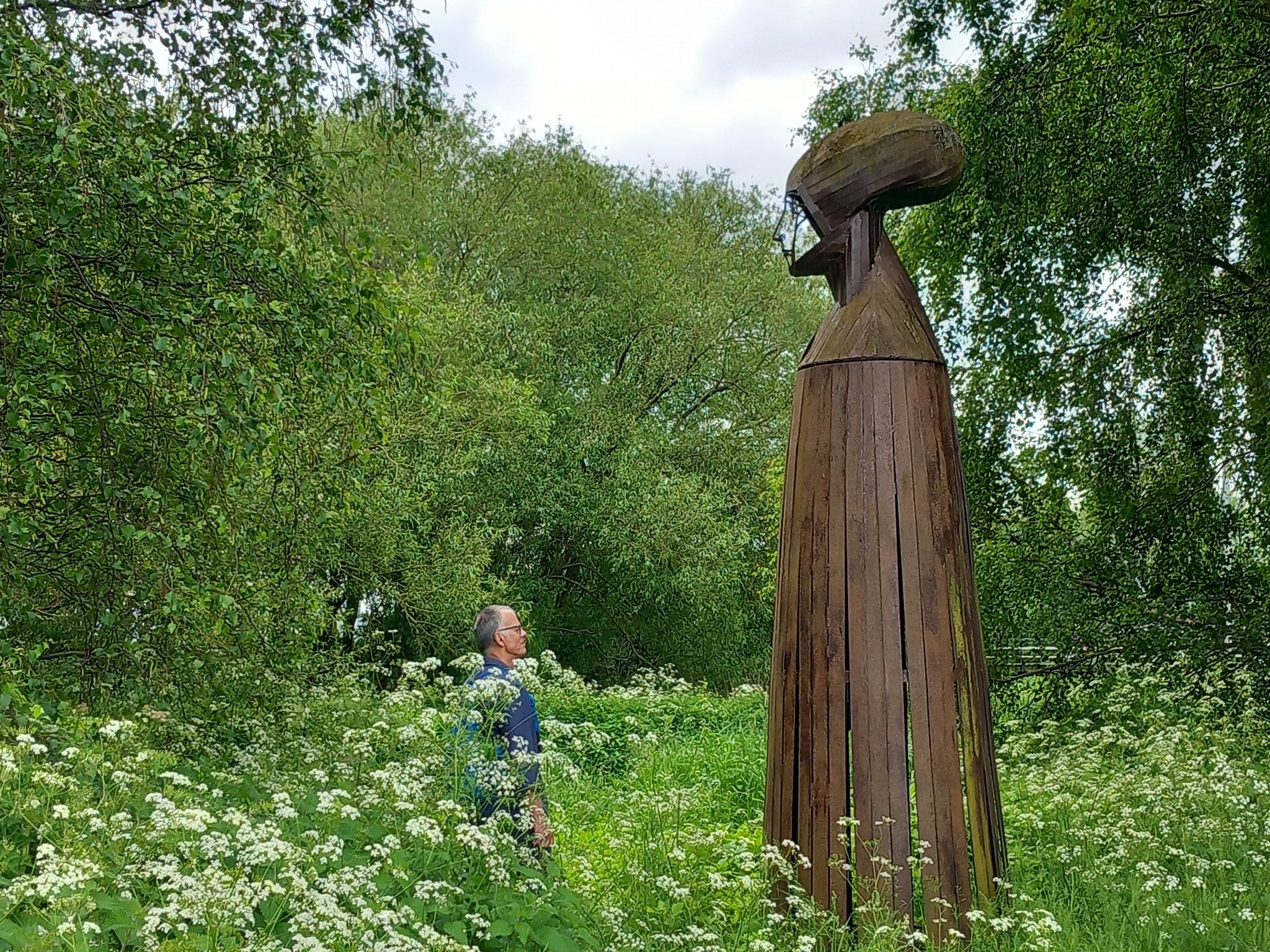
As you continue towards Burton Mail Centenary Woodlands, keep your eyes peeled for one of Burton’s most distinctive pieces of public art, the St Modwen sculpture.
Standing an impressive 14 feet tall, the sculpture was designed by artist John Fortnum and unveiled in 1995. Made from steel, wood and brass, it forms part of the Washlands Sculpture Trail on Andressey Island.
And this isn’t a sculpture you simply look at, listen to it too! Its cloak is made from strips of steel that move gently in the wind, creating soft, melodic sounds as they sway and turn towards the breeze.
The sculpture celebrates St Modwenna, the legendary 7th-century Irish noblewoman and abbess whose story is woven into the history of Burton.
According to local tradition, St Modwen founded a religious settlement and chapel on Andressey Island before continuing her missionary work. Her association with Burton became so strong that she was later regarded as the town’s patron saint. Her supposed remains were eventually transferred to a shrine at Burton Abbey, which became an important pilgrimage site.
There’s even a wonderful Burton legend surrounding her death. According to tradition, her soul was carried to heaven by silver swans – helping to explain why the swan has become such an enduring symbol within Burton’s riverside landscape.
So, when you spot the St Modwen sculpture on your walk, take a moment to look up, listen to the wind moving through it and think about the remarkable story behind both the sculpture and the woman it represents.
From here, continue towards Burton Mail Centenary Woodlands, where the walk moves from ancient history and public art into the natural beauty of The National Forest.
Burton Mail Centenary Woodlands | A National Forest Escape in the Heart of Town
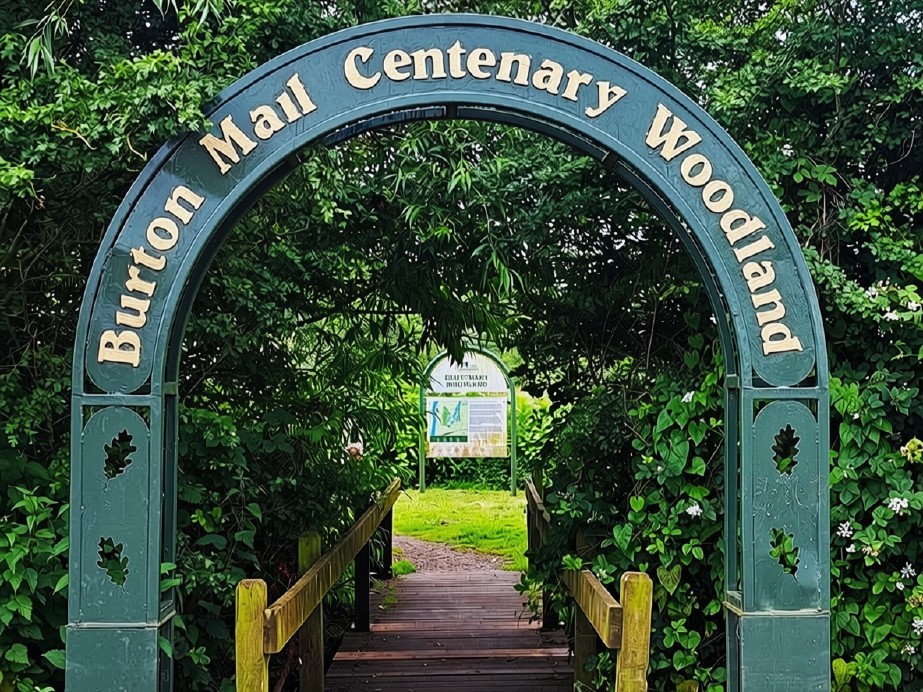
Cross the River Trent and discover the Burton Mail Centenary Woodlands, a wonderful piece of woodland that proves you don’t have to travel into the countryside to experience The National Forest.
The woodland was opened to the public on 2 May 1998, exactly 100 years after the Burton Mail was first published. It was created through a partnership involving East Staffordshire Borough Council, the National Forest Company and the then landowners, Carlsberg Tetley. More than 4,500 native trees and shrubs were initially planted, including willow, poplar, alder, oak and ash.
And there’s a really important reason for those trees. The woodland was created as floodplain woodland, a habitat that has become increasingly rare because floodplain land has historically been cleared for agriculture.
Today, surfaced and mown paths make exploring easy, while the woodland provides a wonderful habitat for wildlife and a peaceful escape from the town.
It’s also part of the wider Woodlands & Washlands Circuit, linking some of Burton’s most impressive urban green spaces.
As you continue, you’ll reach one of Burton’s best-loved parks, Stapenhill Gardens.
Ferry Bridge | Burton’s Victorian Landmark
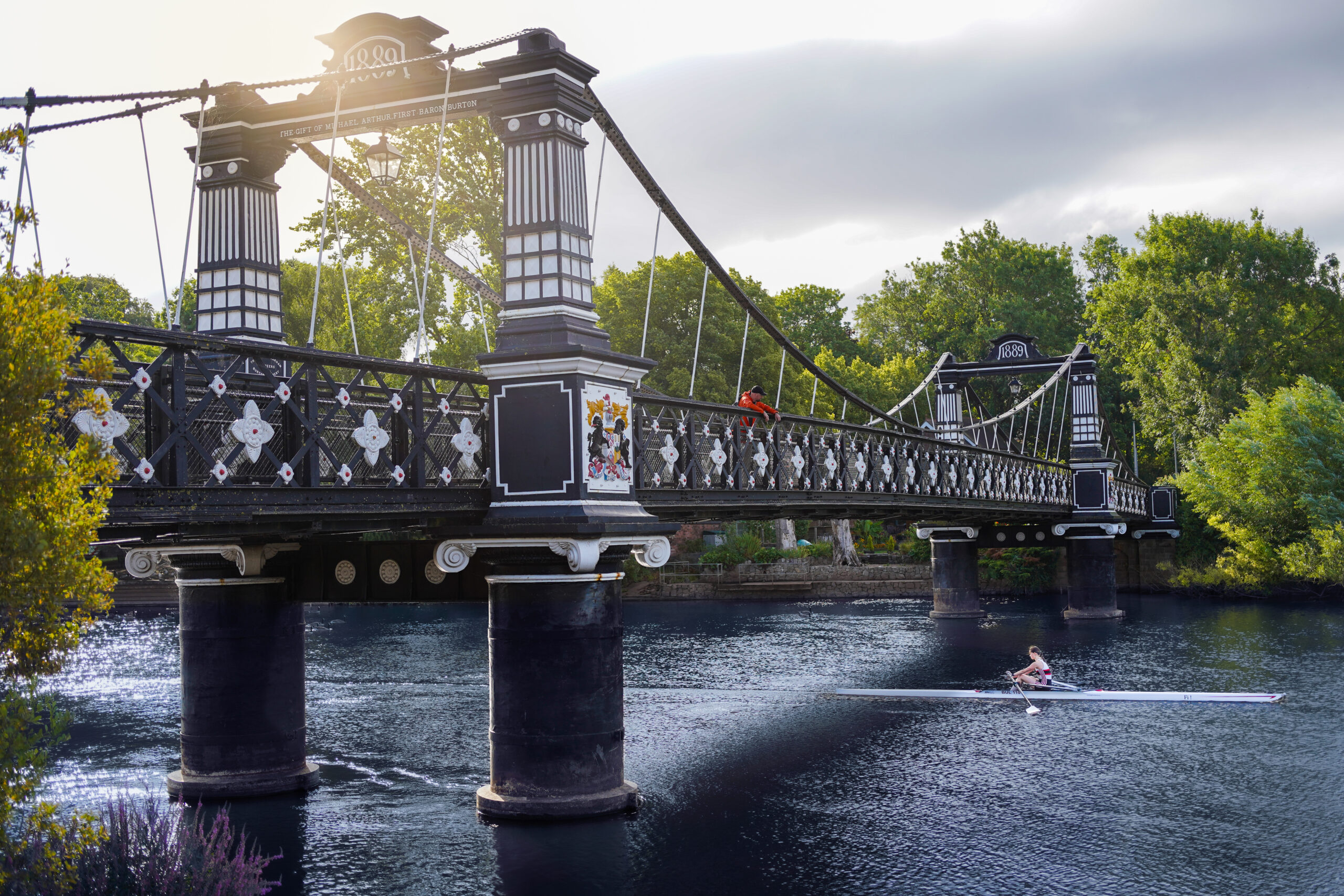
Stapenhill Gardens | Flowers, History & Burton’s Famous Swan
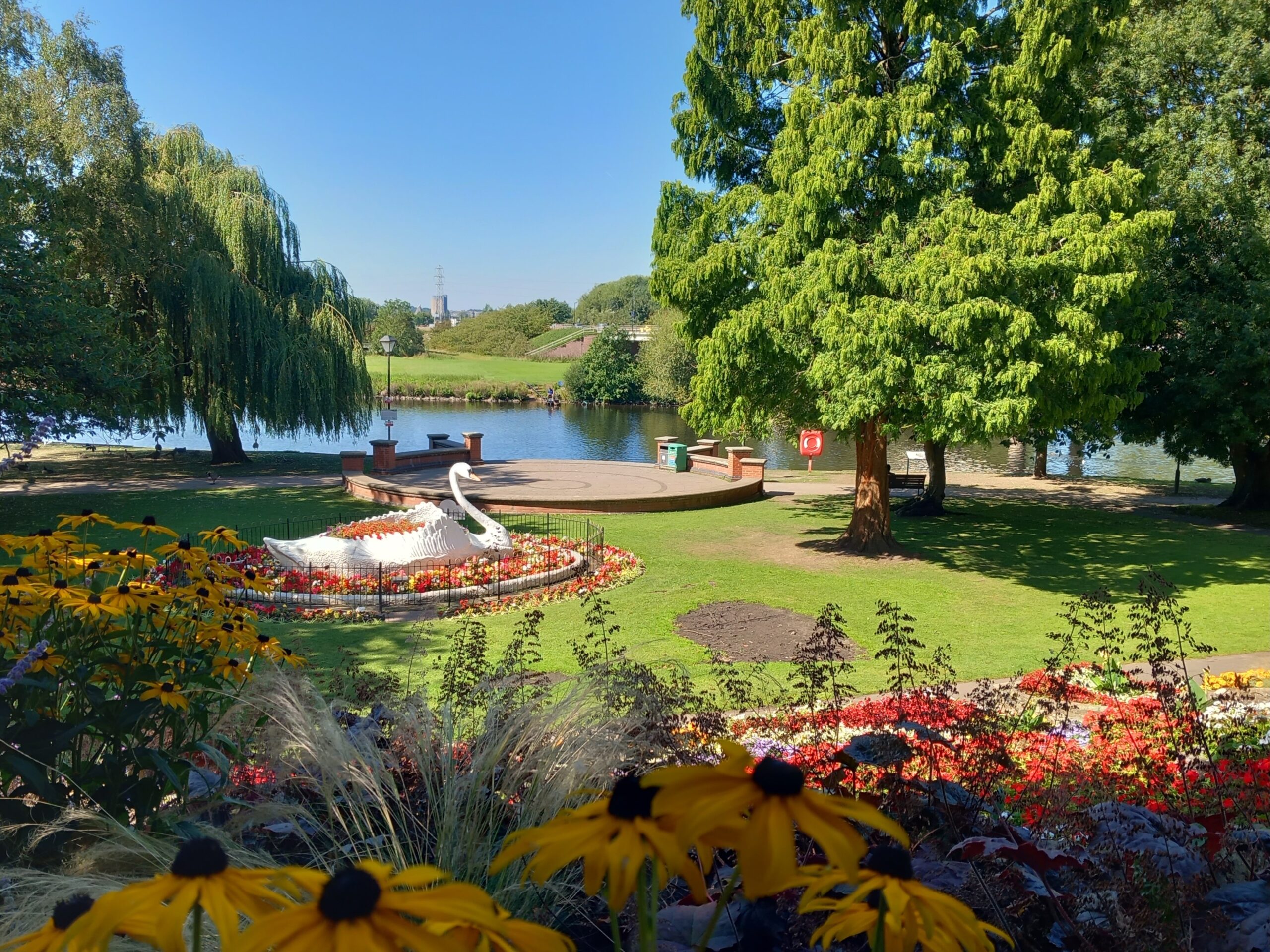
Stapenhill Gardens is a real Burton gem, with formal gardens, open grassland, woodland and a popular play area. It’s been a much-loved community space for generations and is a great place to slow down, admire the planting and enjoy the riverside setting.
But there’s much more to the gardens than beautiful flowers.
The site was once part of the grounds of Stapenhill House. In 1933, Henry Goodger donated land adjoining the former house and part of its gardens to the town as a pleasure ground in memory of his mother. The gardens became an important public space, although part of the original site was later lost when the access road for St Peter’s Bridge was constructed in 1985.
And then there’s the swan.
You can’t visit Stapenhill Gardens without spotting the enormous swan sculpture and planter – one of Burton’s most recognisable landmarks.
Built by the borough council in 1953, the cement-rendered swan was made by council staff during the winter months using reclaimed bricks and other materials. It even has glass marble eyes!
But why a swan? That’s where the story gets really interesting. There are several theories. It may have been inspired by sightings of rare whooper and Bewick’s swans on the River Trent in 1951. Another local story links it to a swan rescued from a boatyard after being covered in oil. There are also connections to the 1953 Coronation of Queen Elizabeth II and local legend surrounding St Modwen.
The Discover East Staffordshire walking guide simply notes that the swans gathering along the river are celebrated by the sculpted swan planter. Whatever its original inspiration, it’s now firmly part of Burton’s identity.
Stapenhill Hollows | The end of your Adventure
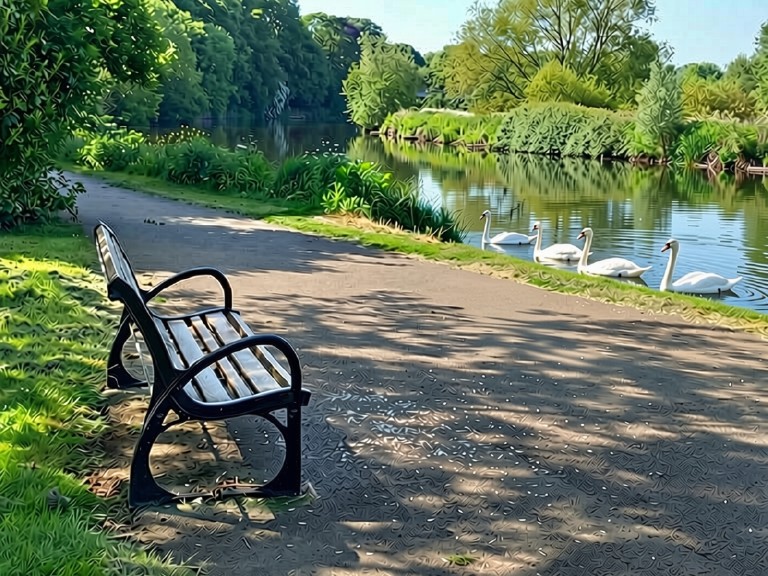
From Stapenhill Gardens, continue along the River Trent towards Stapenhill Hollows.
This wonderful urban green space is managed as a wildlife corridor and is particularly popular with families. The paths are mostly flat and easy-going, making it a great option for younger walkers, scooters and balance bikes.
But keep your eyes open, there’s plenty to discover!
Along the paths you’ll find five creative wooden sculptures and five rubbing posts, creating a fun little trail for children to follow. Don’t forget to bring paper and crayons if you want to have a go at making your own rubbings!
If you’re feeling energetic, you can extend your adventure by following the Brizlincote Nature Walk. This longer 4.5-mile route takes you through grassy fields, orchards and Stapenhill Woodland, passing Winshill Water Tower along the way. There are six information boards packed with information about the route and local wildlife, with activities encouraging walkers to look out for kestrels, buzzards, peregrine falcons and even red kites.
For a shorter family adventure, though, the Hollows themselves are perfect – and after all that walking, it’s time for the best part.
From here you’ll need to cross Trent Bridge to get return to your start point on The Washlands
Stay for Lunch, You’ve Earned It!
All that exploring is bound to work up an appetite! After your riverside adventure, it’s time to slow down, refuel and treat yourself. Burton upon Trent has a fantastic choice of independent cafés, each with its own character and plenty of tempting options for lunch, coffee and, of course, something sweet.
Whether you fancy a cosy coffee and cake, a relaxed lunch or somewhere stylish to linger a little longer, there’s a perfect spot waiting for you. So finish your walk, pull up a chair and make your day out last a little longer!
Lunch Stop | Annie Maison

If you’re looking to turn your walk into a longer day out, Annie Maison on Station Street is a fantastic choice.
This stylish coffeehouse and bar is ideal for settling down after your adventure with great food, speciality coffee and something refreshing to drink. Its menu has included everything from breakfast favourites and flatbreads to sharing platters, burgers and sweet treats, with vegetarian and vegan options available.
Lunch stop | Café B

For another great independent option, head to Café B on Burton’s High Street.
It’s a relaxed and welcoming spot for a well-earned break, whether you’re after lunch, a hot drink or something sweet after your walk. It’s ideally placed for continuing your Burton adventure afterwards, with the town centre’s shops and attractions close by.
Lunch Stop | The Alphabet Gift Shop & Café
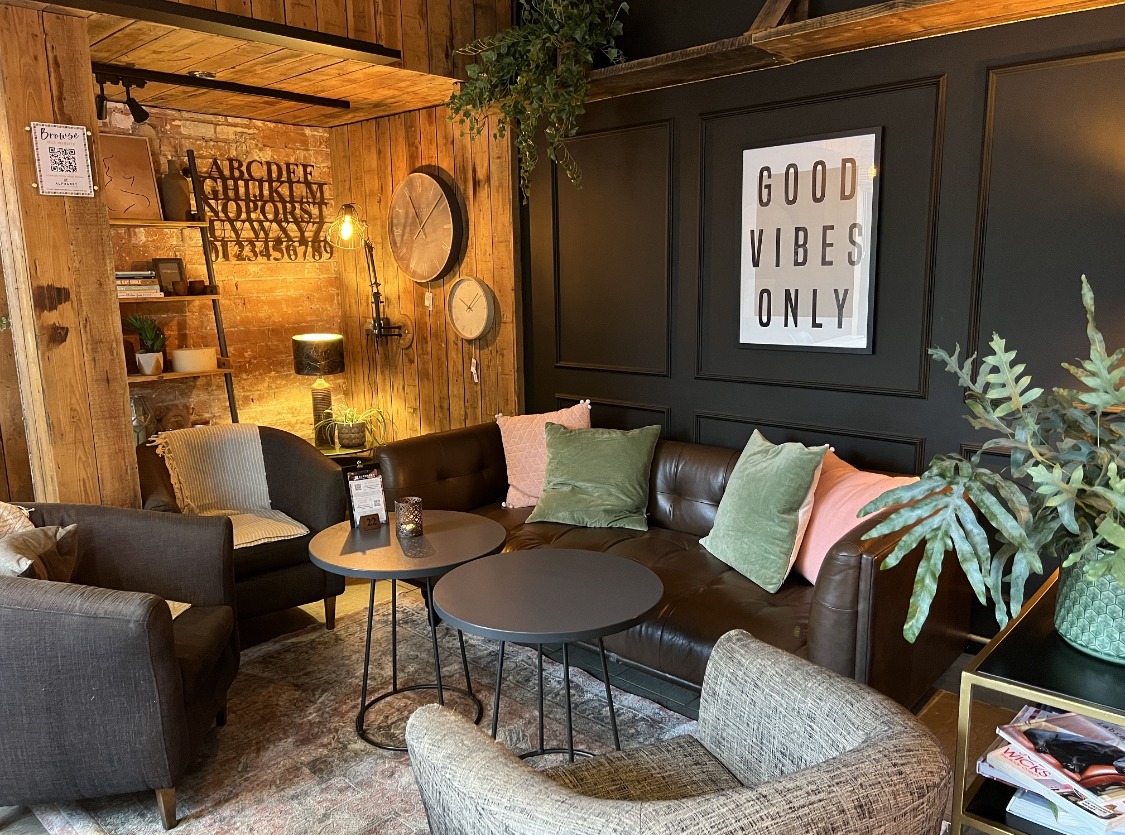
Or if you want something closer to the main car park and are ready for a well-earned coffee and something delicious? The Alphabet Gift Shop & Café on Union Street is a charming independent café and gift shop in the heart of Burton.
It’s the perfect place to relax after your riverside adventure, with artisan coffee, speciality teas, light lunches, freshly made sandwiches, homemade cakes and seasonal treats. Once you’ve refuelled, have a browse around the gift shop for something special to take home.
Ready to explore Burton?
What makes this walk so special is the sheer variety. In just one adventure you can explore wetlands and floodplains, spot dragonflies and birds, wander through National Forest woodland, uncover the story of Stapenhill House, meet Burton’s famous swan and discover creative wooden sculptures – all within easy reach of the town centre.
And then, of course, there’s the reward waiting at the end: coffee, cake and a delicious lunch!
So grab your walking boots, bring the family, and get ready to discover a side of Burton upon Trent you might never have expected.
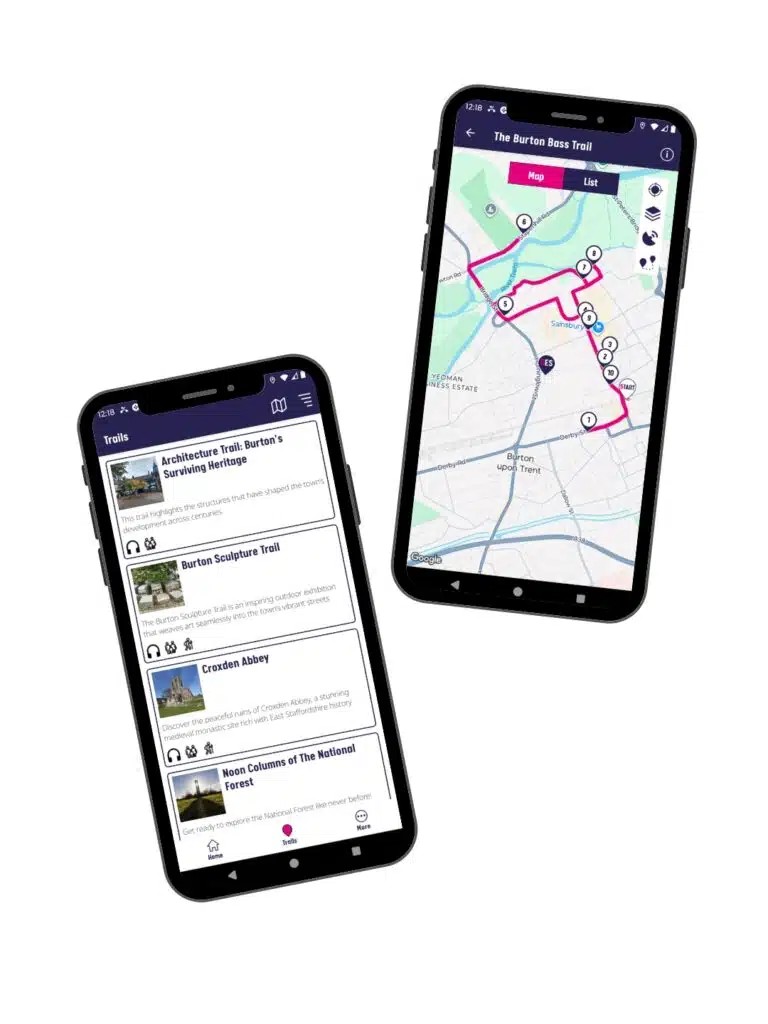
Download Our Free Trail App Today!
Don’t forget to take your guide with you! Download the FREE Discover East Staffordshire Trails App, available on iPhone and Android, to explore walking routes, discover public art, uncover hidden gems and find even more amazing places to visit across East Staffordshire.
Download the Discover East Staffordshire Trails App today, and start your next adventure!