
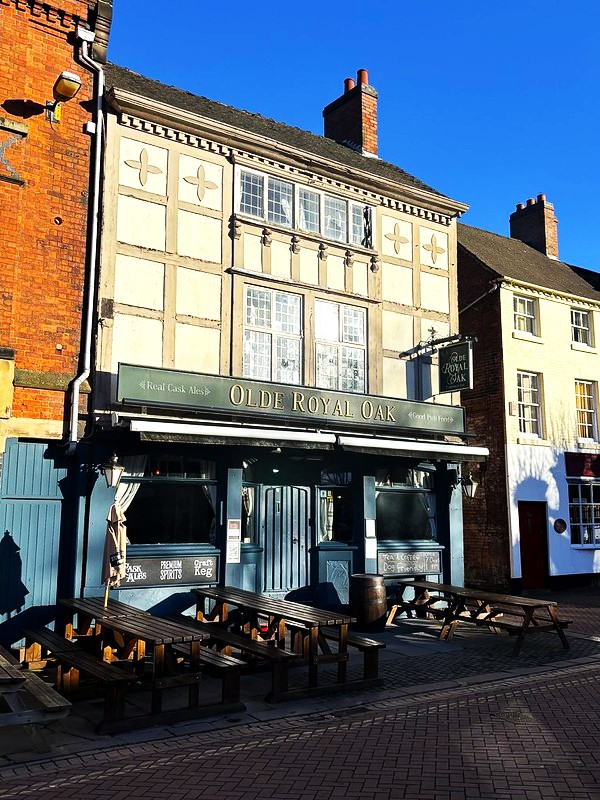
Looking for one of the most intriguing historic pubs in Burton upon Trent? In the heart of Burton Market Place, The Olde Royal Oak offers visitors much more than a traditional pub experience. This atmospheric, half-timbered building is surrounded by stories of Burton’s old gaol, prisoners, witches, priests, secret tunnels and ghostly encounters.
Burton upon Trent may be famous for its brewing heritage, but explore a little further and you’ll discover a much darker side to the town’s history. The Olde Royal Oak is a fascinating place to begin.
The Olde Royal Oak and Burton’s Historic Gaol
The Olde Royal Oak is one of Burton upon Trent’s oldest hostelries. The three-storey, half-timbered building is thought to be around 300 years old, with part of the rear section believed to date from around 1640. Its position in Burton Market Place places it at the centre of an area that has played an important role in the town’s history for centuries.
What makes the pub particularly fascinating is its connection with Burton’s former gaol. Historical records associated with the building state that it once incorporated a lock-up for holding prisoners. Local accounts go further, telling of a lock-up in the Market Place dating back to the 1270s. According to this local tradition, the gaol was known as “Helle”, supposedly because of the grim conditions endured by prisoners.
The story goes that the gaol remained in use until the 1760s, with the building subsequently continuing to have connections with imprisonment and public life. Local accounts even say that the landlord was required to guard prisoners held in a cell and could be held responsible if one escaped.
There is an important distinction between the documented history of the building and the more detailed stories surrounding the medieval gaol. The Royal Oak’s association with a prisoner lock-up is recorded history, while some of the details of the 1270s gaol come from local historical tradition. For visitors, however, the combination makes the pub an extraordinary window into Burton upon Trent’s darker past.
Is the Olde Royal Oak Haunted?
With a history involving prisoners and a former gaol, it is perhaps no surprise that the Olde Royal Oak has developed a reputation as one of Burton upon Trent’s haunted locations.
Local ghost stories describe a number of spirits associated with the building, including a gaoler, a priest and a witch. Burton’s ghost walks begin and end at the Royal Oak and recount stories of paranormal encounters ranging from unsettling whispers to reported apparitions.
Some of the stories are particularly dramatic, including accounts of spirits allegedly interacting with visitors. One local ghost-walk account even describes an encounter that reportedly frightened members of a group so much that they fled the tour.
These are reported paranormal experiences and local folklore, not scientifically verified evidence of ghosts. But they have become part of the modern character of the Olde Royal Oak and add another dimension to a building that already has a remarkable history.
For visitors interested in haunted places, Burton ghost stories or the supernatural side of Staffordshire, the Royal Oak provides a fascinating starting point.
The Stapenhill Witch: Alice Gooderidge
One of the most famous characters in Burton’s darker history is Alice Gooderidge, the Stapenhill Witch.
Unlike the ghosts associated with the Olde Royal Oak, Alice was a real historical figure. Her story dates to the late 16th century and centres on Thomas Darling, a young Burton boy whose extraordinary experiences became the subject of a pamphlet published in 1597.
Darling claimed that he had encountered a woman associated with witchcraft and suffered frightening episodes that were interpreted at the time through beliefs about demonic possession and supernatural forces. Alice Gooderidge became caught up in the accusations and was investigated in connection with the case.
The story provides a fascinating glimpse into Tudor England, when unexplained illness and behaviour could be interpreted through ideas about witchcraft and the supernatural.
Over the centuries, Alice Gooderidge has become an important part of Burton’s folklore. Modern ghost stories connect the Stapenhill Witch with Burton Gaol and the Olde Royal Oak, with Alice described as one of the spirits said to haunt the building.
There is an important difference, however: the original historical account does not establish that Alice Gooderidge haunts the Olde Royal Oak. Her ghostly connection with the pub belongs to later folklore.
That mixture of genuine history and later storytelling is exactly what makes the Stapenhill Witch such an intriguing part of Burton’s heritage.
The Secret Tunnel Beneath Burton
The Olde Royal Oak has another intriguing story associated with it – the tale of a tunnel connecting the pub with Burton Abbey.
Historical information about the building records that it was once connected to the Abbey by a tunnel beneath the church, although the passage is now blocked.
The exact history of the tunnel is less certain. When was it built? Who used it? Why was it needed? These questions have helped the story become part of Burton’s local folklore.
The proximity of the Royal Oak to the former Burton Abbey makes the tale particularly atmospheric. The Abbey was one of the most important religious sites in the area, and stories of priests, monks and secret movements through the town have naturally become intertwined with its history.
While the existence of a former connection is recorded, the precise purpose and story of the tunnel should be treated with caution.
Burton’s Ghosts, Priests and The Little Girl
The supernatural stories surrounding the Olde Royal Oak are part of a much wider collection of Burton ghost stories.
The former Abbey and the surrounding area have inspired tales of ghostly priests, abbots and other mysterious figures. Local ghost walks explore these stories alongside tales of witches and gaolers, creating a journey through what is described as the darker side of Burton’s history.
Another local story concerns a little girl said to haunt the area around Burton Abbey and the River Trent. According to the folklore, she drowned in the river while her grandfather was asleep and failed to prevent her from falling into the water. Her spirit is then said to continue searching for him.
It is a haunting story, but there is no reliable historical evidence confirming the girl’s identity or establishing that the event happened exactly as the legend describes. Nor is she specifically established as a ghost of the Olde Royal Oak.
Instead, her story belongs to the wider folklore surrounding Burton’s historic Abbey and riverside. Read more here.
Burton Market Place and Its Darker History
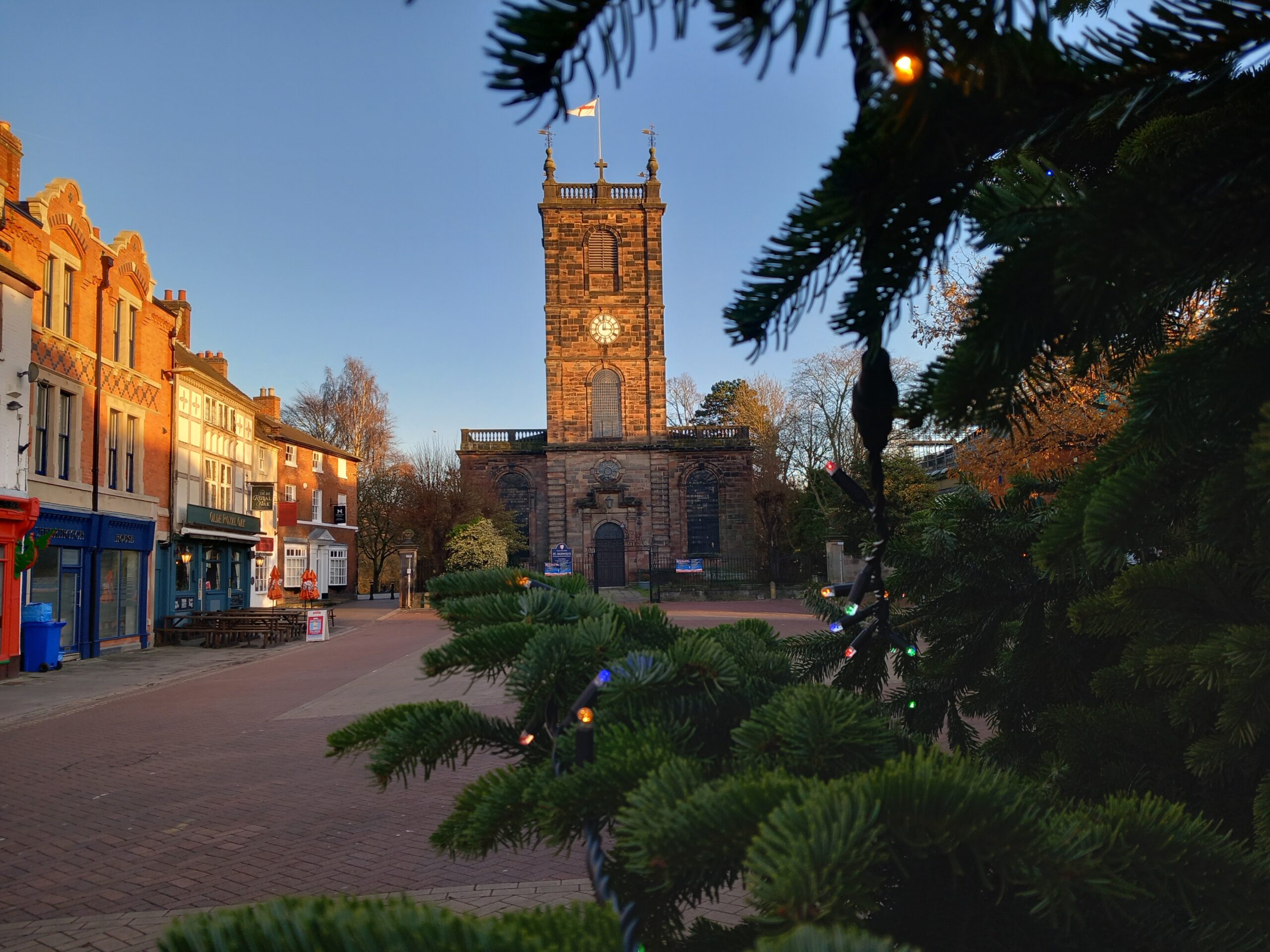
To understand why the Olde Royal Oak has such an intriguing reputation, it is worth looking at Burton Market Place itself.
The Market Place has been at the heart of Burton’s civic and commercial life for centuries. Today, it is a familiar place to shop, meet friends and explore the town, but historically it was also a setting for justice and punishment.
Stories about Gallows-flat and Gallows-lane have contributed to the darker folklore surrounding Burton, and there are even claims about a hanging tree in the Market Place.
There are, however, documented examples of Burton’s grim history of public punishment. One of the best known is Edward Wightman, a Burton man executed for heresy in 1612. His punishment was particularly horrific: he was burned at the stake rather than hanged.
Stories of the old gaol, prisoners, witches and public punishment have therefore become woven into the history and folklore of the Market Place, creating the atmospheric backdrop to the Olde Royal Oak’s reputation today.
Discover the Olde Royal Oak in Burton upon Trent
For visitors exploring Burton upon Trent, the Olde Royal Oak offers a chance to discover a side of the town that is easy to overlook.
Its historic timber frame, location in the Market Place and connection with Burton’s former gaol make it an interesting stop for anyone fascinated by local history. Add in stories of the Stapenhill Witch, ghostly gaolers, mysterious priests and a supposed tunnel beneath the town, and you have a pub with a story unlike many others.
You don’t need to believe in ghosts to enjoy the experience. The stories themselves are part of Burton’s cultural heritage, showing how historical events, local characters and generations of storytelling can combine to create the folklore of a place.
So, when you’re exploring Burton upon Trent and East Staffordshire, take a stroll through the Market Place and look out for the Olde Royal Oak.
Come for the history. Stay for the atmosphere. And, if you’re feeling brave, keep an ear out for something unexplained.
Because Burton’s history isn’t just about beer, some of its best stories are hiding in the shadows.